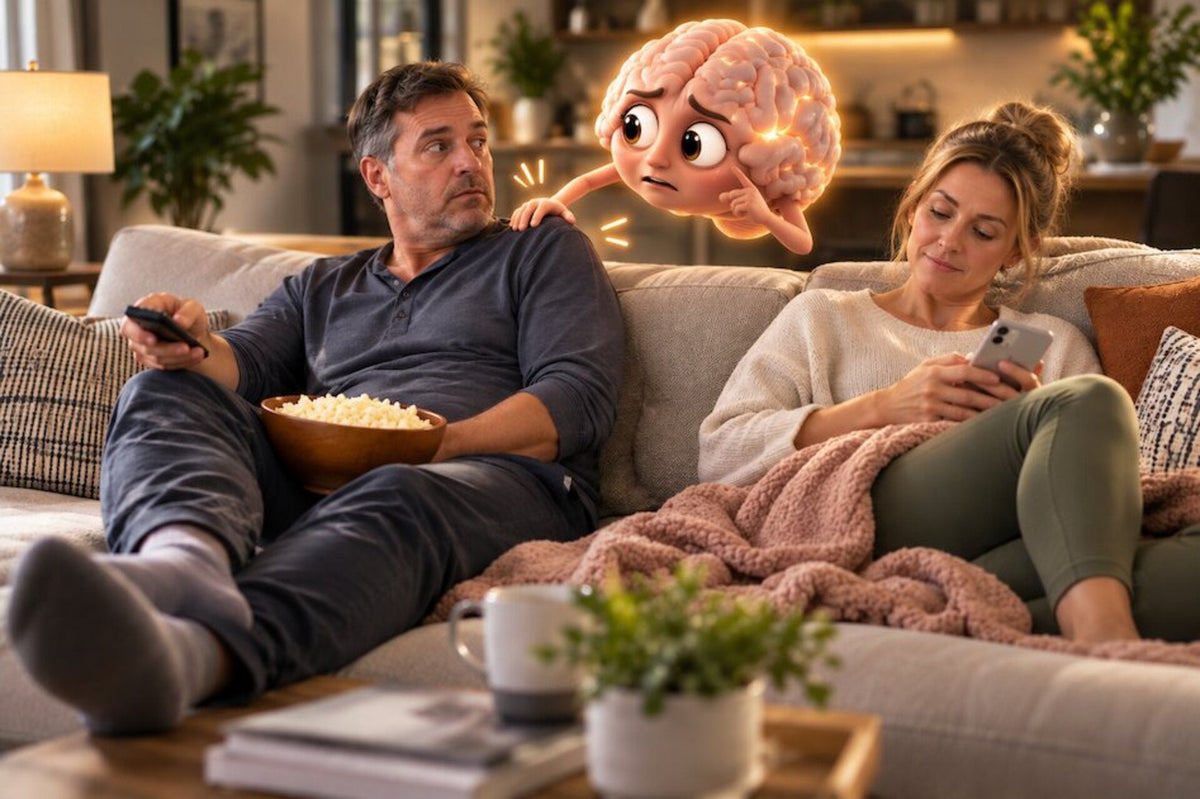
What if one of the most important things you can do for your aging brain has almost nothing to do with your brain?
Most people think staying sharp means crossword puzzles, learning new things, getting enough sleep, or taking the right brain-supporting nutrients.
But a fascinating new 2026 study points somewhere completely different. Researchers followed older adults for years and uncovered one surprising measure elsewhere in the body.
It was associated with both better cognitive function and greater preservation of brain structure over time.
And that may be just the beginning!
Scientists are uncovering an unexpected line of communication between your brain and a part of your body most people would never associate with memory or mental sharpness.
It may influence blood sugar, inflammation, cellular energy—and even release signaling molecules that researchers believe could affect what happens inside your brain.
The best part? There’s something you can start doing this week to put this connection to work!
So, what is your brain silently pleading with you to do?
Muscle Is Much More Than Something That Moves You
For decades, we tended to think of muscle primarily in mechanical terms.
Muscles help you walk, lift, climb stairs, get out of a chair, carry groceries, and maintain your balance.
That all remains enormously important, particularly with age.
But researchers now recognize skeletal muscle as an active metabolic and signaling organ.
Your muscles help regulate blood sugar. They consume glucose from the bloodstream, respond to insulin, store glycogen, burn fatty acids, and contribute substantially to whole-body energy metabolism.
Muscle also communicates with other organs.
When muscles contract during exercise, they release signaling molecules sometimes called myokines and, more broadly, exerkines.
These molecules can interact with the immune system, fat tissue, liver, blood vessels, and potentially the brain.
Recent reviews of the emerging “muscle-brain axis” reveal a complex communication network between muscle and the brain.
This communication involves substances such as irisin, cathepsin B, interleukins, insulin-like growth factor-1, and other exercise-related signaling molecules.
Researchers are studying how these signals may influence neuroplasticity, inflammation, metabolism, and cognitive function.
In other words, your muscles aren't simply waiting for instructions from your brain. The conversation appears to go both ways.
👉 Keeping your muscles healthy may be one of the ways you help keep your brain healthy, too.
What the New Study Found
The 2026 study, published in Aging Cell, examined something called skeletal muscle mitochondrial oxidative capacity.
That phrase sounds complicated, but the basic idea is simple. Your mitochondria are the tiny structures inside cells that help convert nutrients into usable energy.
Oxidative capacity is essentially a measure of how effectively those mitochondria can perform that energy-producing work.
Researchers found that greater muscle oxidative capacity was associated with higher cognitive function and preservation of brain structure.
The study followed participants for periods extending up to approximately 10 years.
That is noteworthy because it suggests the condition of your muscles at a cellular level may tell us something about what is happening in the aging brain.
However, an important distinction is necessary.
The study found an association. It does not establish that poor muscle mitochondrial function directly causes cognitive decline or that improving muscle mitochondria will prevent Alzheimer's disease.
It's possible that several underlying factors—including physical activity, cardiovascular health, metabolic health, genetics, diet, or overall biological aging—affect both muscle and brain function.
Still, the finding fits remarkably well with what researchers are learning from other areas of aging science.

Mitochondria May Be One Important Link
Few organs are as energy-demanding as your brain. Although the brain represents only a small percentage of total body weight, it requires a disproportionate share of the body's energy supply.
As you age, mitochondrial function can become less efficient. Cells may have more difficulty generating energy, and oxidative stress can increase.
These changes can occur in skeletal muscle as well as other tissues. Exercise provides an important countermeasure.
Regular physical activity encourages the body to build and maintain mitochondria and improves muscle cells' ability to use oxygen and produce energy efficiently.
This may be one reason researchers are increasingly interested in mitochondrial fitness as part of healthy aging. But mitochondria are only one part of the muscle-brain connection.
How Keeping Muscles Active Benefits Your Brain
The muscle-brain connection isn’t built around just one biological pathway. Every time you put your muscles to work, you set off a cascade of effects that can reach far beyond the muscles themselves.
Here are four important ways researchers believe active muscle may help create a healthier environment for your brain:
1. Healthy Muscle Helps Control Blood Sugar
Muscle is one of the body's major destinations for glucose after you eat.
When muscles respond well to insulin, they readily pull glucose from the bloodstream and use or store it.
However, if muscle tissue becomes less metabolically active, insulin resistance may worsen. Blood glucose and insulin levels can rise, increasing the risk of type 2 diabetes and other metabolic problems.
That matters to the brain.
Poor metabolic health has repeatedly been associated with greater risk of cognitive impairment and dementia.
Exercise—particularly a combination of resistance exercise and aerobic activity—can increase insulin sensitivity and improve glucose disposal.
That means building or preserving muscle may help the brain indirectly by improving the metabolic environment in which the brain functions.
2. Stronger Bodies Often Have Healthier Blood Vessels
The brain depends on an enormous network of blood vessels to deliver oxygen and nutrients every second of every day.
Conditions that damage those vessel networks—high blood pressure, diabetes, smoking, and cardiovascular disease, among them—also increase the risk of vascular cognitive impairment and dementia.
Physical activity helps improve vascular function, circulation, blood pressure, and cardiovascular fitness.
This is one reason brain-health experts rarely separate cardiovascular health from cognitive health anymore. What's good for your blood vessels is also good for your brain.
3. Active Muscle Helps Regulate Inflammation
Short-term inflammation is an essential part of healing and immune defense. Chronic low-grade inflammation is something else entirely.
Persistent inflammation tends to increase with age and has been associated with cardiovascular disease, metabolic dysfunction, frailty, and neurodegenerative conditions.
Exercise has complex effects on the immune system, but repeated physical activity is generally associated with a healthier inflammatory profile.
Muscle itself may play an important role in this process, releasing myokines during contraction that can influence biological activity throughout the body.
That puts a whole new spin on the phrase “use it or lose it.”
Using your muscles may actually alter the chemical signals circulating throughout the body.
4. Your Muscles Send Messages to Your Brain
One of the most fascinating areas of exercise science involves the molecules produced or influenced by contracting muscles.
Consider irisin.
Research suggests that exercise can increase signaling through the FNDC5/irisin pathway. Experimental studies have linked this pathway with brain-derived neurotrophic factor, better known as BDNF.
BDNF is sometimes described as fertilizer for the brain because it helps support the growth, survival, and adaptability of neurons.
It plays an important role in learning, memory, and neuroplasticity—the brain's ability to reorganize and create new connections.
Other muscle- and exercise-related signaling molecules are also under investigation, including cathepsin B, IGF-1, and various cytokines.
However, this research is still developing.
Scientists understand much more clearly that exercise benefits the brain than they understand precisely which myokines are responsible or how important any single signaling molecule is.
The practical message doesn't require waiting for every molecular pathway to be mapped out.
👉 Moving your muscles appears to trigger biological effects that extend far beyond the muscles themselves.

Muscle Loss and Cognitive Decline Often Travel Together
Beginning in midlife, adults gradually lose muscle unless they actively work to preserve it.
When muscle loss becomes significant enough to reduce strength and physical function, it can contribute to sarcopenia.
Sarcopenia isn't simply a cosmetic loss of muscle size. It can mean slower walking, greater difficulty getting out of a chair, reduced balance, increased risk of falls, loss of independence, and greater frailty.
And increasingly, researchers have observed that sarcopenia and cognitive decline frequently occur together.
A 2026 review examining the muscle-brain axis concluded that the two conditions may share several underlying mechanisms.
These include altered myokine signaling, metabolic dysfunction, inflammation, and reduced physical activity.
Interestingly, strength and physical performance may tell us more than muscle size alone. You don’t necessarily need large muscles to be functionally strong.
That's why simple measures such as walking speed, grip strength, ability to rise from a chair, and balance are increasingly useful indicators of how well an older adult is aging.
Strength Training Is Brain Training, Too
If your goal is protecting your brain, aerobic exercise deserves its well-established place.
Walking, cycling, swimming, and other cardiovascular activities improve circulation, cardiovascular fitness, insulin sensitivity, and mitochondrial function. But resistance training provides unique benefits of its own.
A 2025 network meta-analysis examined the effects of different types of exercise in older adults.
It found that resistance exercise was particularly effective for improving overall cognitive function and inhibitory control, while aerobic activity showed particular benefits for memory.
That doesn't mean you need to start powerlifting. Resistance exercise can be remarkably simple.
It might include:
-
Squats or repeated sit-to-stands from a chair
-
Wall or countertop push-ups
-
Resistance-band rows
-
Step-ups
-
Leg presses
-
Carrying dumbbells or other weights
-
Body-weight exercises
-
Weight machines
What matters is that the muscles encounter enough resistance to be challenged.
Over time, the challenge should gradually increase as you become stronger.
In general, major health organizations recommend muscle-strengthening activity at least twice per week.
If you haven't exercised for a long time—or have significant heart, joint, balance, or other medical problems—it's wise to discuss an appropriate starting point with your healthcare provider.
You may also want to work with a professional trainer who can help you begin at the appropriate level.
Remember the Raw Material: Protein
Exercise provides the stimulus to maintain and build muscle.
Protein supplies the raw material.
This is particularly important with age because older muscle often becomes less responsive to small amounts of protein—a phenomenon referred to as anabolic resistance.
For that reason, some experts recommend higher protein intake for healthy older adults than the standard (general) adult Recommended Dietary Allowance.
For example, the European Society for Clinical Nutrition and Metabolism recommends approximately 1.0 to 1.2 grams of protein per kilogram of body weight per day for healthy older adults.
Greater amounts may sometimes be appropriate during illness or recovery.
For perspective, a person who weighs 150 pounds (about 68 kg), would need roughly 68-82 grams of protein per day, or about 22 to 27 grams per meal.
Individual requirements vary, and you should verify with your healthcare provider, particularly if you have kidney disease or other conditions.
It's also important to distribute protein intake throughout the day rather than eating very little at breakfast and lunch and nearly all of it at dinner.
Good protein sources include:
-
Fish
-
Poultry
-
Eggs
-
Greek yogurt and other high-protein dairy foods
-
Lean meat
-
Beans and lentils
-
Nuts and seeds
-
Protein powders when food alone doesn't meet individual needs
The amino acid leucine, found particularly in many animal proteins and some plant proteins, plays an important role in triggering muscle protein synthesis.
But no protein supplement can compensate for muscles that are never challenged. Nutrition and resistance exercise work best together.

Can Supplements Support Muscle and Brain Health?
Several nutrients involved in muscle function, energy metabolism, or brain health are being investigated for healthy aging.
Among the better-known examples:
Creatine helps regenerate cellular energy and has an extensive research history in muscle performance.
Researchers are also increasingly investigating its potential effects on cognition, particularly under conditions in which brain energy demand is high.
Magnesium participates in hundreds of enzyme reactions, including those involved in cellular energy production, muscle function, nervous-system activity, and sleep.
Vitamin D plays an important role in muscle and bone health, particularly in people who are deficient.
Omega-3 fatty acids have important roles in cell membranes and inflammation regulation and continue to be studied for both muscle and brain health.
CoQ10/Ubiquinol participates directly in mitochondrial energy production.
Curcumin and other polyphenols are being studied for their potential effects on oxidative stress and inflammatory pathways.
These compounds are famously difficult to absorb, so taking them in absorption-enhanced forms such as our patented Protisorb™ UltraCur® Curcumin helps make sure you get your money’s worth from your supplements.
Berberine (such as is found in our Pathway 3™ product and in UltraMetabolic™ combined with other herbs) helps support healthy blood sugar uptake to the muscles.
As with curcumin, it is much more effective with our patented Protisorb™ technology for absorption.
Supplements help address nutritional gaps and support specific physiological pathways... but don’t let them distract from the foundations.
No capsule can duplicate the metabolic effects of repeatedly contracting your muscles.
The Best Strategy May Be a Combination
So, which is better for your brain—strength training or aerobic exercise?
That's probably the wrong question. The available evidence increasingly suggests that the strongest healthy-aging strategy combines both.
Think of it this way:
Aerobic exercise trains your heart, lungs, circulation, and endurance.
Resistance exercise helps preserve muscle, strength, metabolic capacity, and physical independence.
Both can improve insulin sensitivity and mitochondrial function. And both appear to benefit the brain.
Everyday movement matters too.
Walking after meals, gardening, climbing stairs, carrying groceries, playing recreational sports, and simply breaking up long periods of sitting all require your muscles to work.
You don't have to live in a gym to build a more active body.
5 Things You Can Do for Your Brain This Week
You don't need a complicated longevity program to get started.
Begin here:
✅ 1. Strength train at least twice this week.
Work the major muscle groups at a level that feels challenging but manageable.
✅ 2. Walk or move every day.
Even short walks count. A 10- or 15-minute walk after a meal can support both cardiovascular and metabolic health. It can be helpful to set a step goal, such as 7,000 steps per day.
✅ 3. Include protein with each meal.
Don't save most of your daily protein for dinner. Split it among all your meals.
✅ 4. Break up prolonged sitting.
Stand, walk, stretch, climb stairs, or perform a few simple body-weight movements throughout the day.
✅ 5. Track what your body can do—not just what it weighs.
-
Can you rise easily from a chair?
-
Carry your groceries?
-
Climb stairs?
-
Walk briskly?
-
Maintain your balance?
-
Recover before falling after tripping on something?
Those may be far more meaningful measures of healthy aging than the number on the scale.
The Bigger Lesson About Healthy Aging
Modern medicine has traditionally separated the body into specialties.
-
Cardiologists treat hearts
-
Neurologists treat brains
-
Endocrinologists treat metabolic disease
-
Orthopedic specialists treat muscles and joints
But your body doesn't recognize those divisions.
-
Your brain depends on your blood vessels
-
Your blood vessels are influenced by your blood sugar
-
Your blood sugar is influenced by your muscles
-
Your muscles depend on your mitochondria
-
Your contracting muscles may be sending biochemical signals that influence organs throughout your body
That's why maintaining muscle may have consequences far beyond whether you can lift a heavy box.
The newest research doesn't prove that strong muscles will prevent dementia, and no responsible scientist would make that claim.
But it adds to an increasingly compelling body of evidence suggesting that muscle health and brain health are deeply connected.
So, if you want to remain sharp, independent, active, and resilient as you grow older, don't focus exclusively on exercising your brain. Exercise the rest of you, too.
Because your brain is paying attention!

FAQs
1. What is the muscle-brain connection?
The muscle-brain connection refers to the ways skeletal muscle and the brain may influence one another.
This communication involves blood sugar regulation, circulation, inflammation, mitochondrial function, and signaling molecules released during exercise.
Growing research suggests that maintaining healthy, active muscle may support cognitive health as we age.
2. Can building muscle improve brain health?
Building and maintaining muscle may support brain health by improving insulin sensitivity, cardiovascular function, mitochondrial health, and the release of exercise-related signaling molecules.
While strength training cannot guarantee protection against dementia, research increasingly links better physical function and muscle health with better cognitive outcomes.
3. Does strength training help prevent cognitive decline?
Strength training has been associated with improvements in several areas of cognitive function in older adults.
Strength training may also indirectly protect the brain by supporting metabolic health, circulation, muscle mass, and physical independence.
However, more research is needed to determine how much it can reduce the risk of cognitive decline.
4. How does muscle loss affect the brain?
Age-related muscle loss, or sarcopenia, is frequently associated with poorer cognitive function and a higher risk of cognitive impairment.
Muscle loss may share several underlying pathways with brain aging, including chronic inflammation, metabolic dysfunction, reduced physical activity, and changes in muscle-derived signaling molecules.
5. What is the best exercise for muscle and brain health?
A combination of resistance training and aerobic exercise appears to offer the broadest benefits.
Strength training helps preserve muscle and metabolic function, while activities such as walking, cycling, or swimming support cardiovascular fitness, circulation, and brain health.

Share:
Studies Reveal Plastics Leaching into Your Morning Routine
Your Body Makes Its Own Cannabinoids: How the Endocannabinoid System Helps You Maintain Balance