
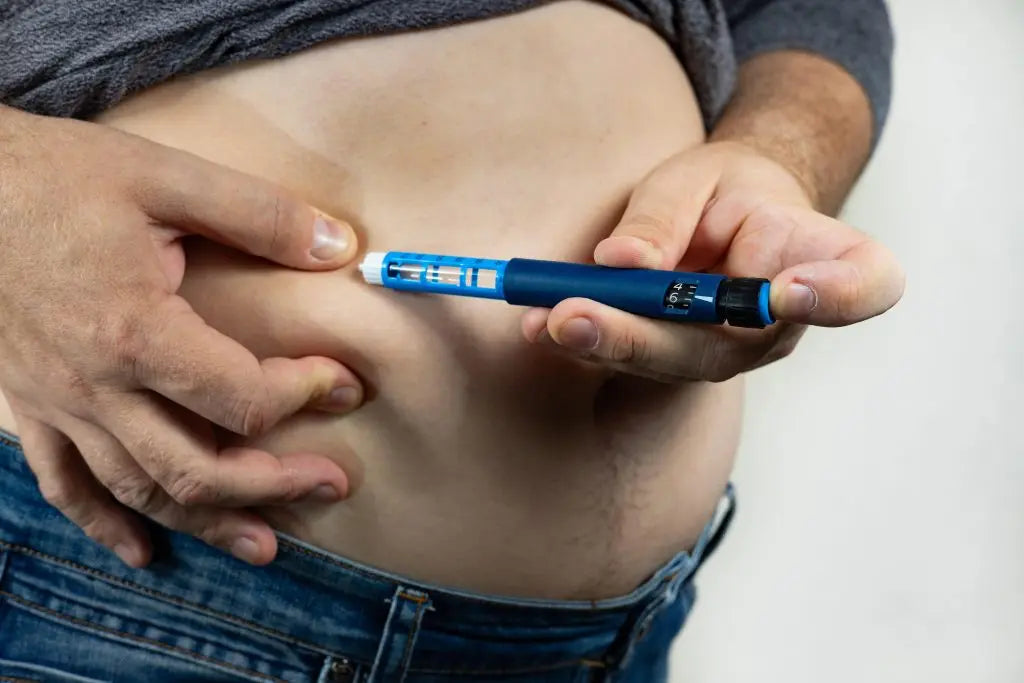
You might have heard about GLP-1 receptor agonists such as Ozempic or Wegovy in social media, on TV, or from your doctor.
Perhaps you’re considering Ozempic for conditions like diabetes mellitus or weight loss but are hesitant due to potential GLP-1 receptor agonists risks and adverse effects. These medications are popular, but knowing the associated risks before jumping in is crucial.
It’s easy to get excited about new treatments that are all the rage. But it’s also important to consider the potential for “GLP-1 receptor agonists risks,” including some serious ones.
Understanding GLP-1 Receptor Agonists Risks Such as Ozempic
GLP-1 receptor agonists like Ozempic or Wegovy (both semaglutides) mimic glucagon-like peptide-1 (GLP-1), a natural hormone that helps regulate blood sugar and appetite.
GLP-1 is naturally released after you eat, to signal the pancreas to release insulin in order to properly lower blood sugar levels.
GLP-1 medications slow down gastric emptying. This emptying delay makes you feel full longer and helps to reduce your calorie intake to aid weight management.
Semaglutides were originally drugs meant to treat diabetes. But a “serendipitous” discovery was made during Phase II trials, when researchers discovered that it caused weight loss as well.
Wegovy is FDA approved for obesity, but others are being used off-label for weight loss.
Note that the drug’s benefits come with trade-offs, including some serious ones.
Consider the potential positives and negatives before starting this medication. Because once you start, it’s very difficult to stop. More on that below.

How GLP-1 Receptor Agonists Such as Wegovy Work
Ozempic, Wegovy and similar drugs bind to GLP-1 receptors in your body, enhancing your natural GLP-1 hormone’s effects. This results in multiple actions to help improve glycemic control and promote rapid weight loss.
GLP-1s stimulate insulin secretion when blood sugar is high (and theoretically only when it’s high). This approach reduces the risk of low blood sugar, although hypoglycemic episodes can still be a problem.
GLP-1 receptor agonists also work in the brain to curb food-craving hormones.
Common Side Effects: What to Expect
Since GLP-1s target the GI system, it should come as no surprise that the most frequent adverse effects of GLP-1 receptor agonists risks also involve the digestive system. Many users initially experience gastrointestinal symptoms.
GLP-1 receptor agonists risks and side effects include nausea, ranging from mild to intense. Some have vomiting episodes. Others experience diarrhea or constipation which disrupts daily routines and affects quality of life.
Ozempic Face
“Ozempic face” is a term used to describe facial distortions among GLP-1 users. GLP-1 receptor agonists risks include rapid facial aging, such as a saggy, wrinkled appearance typically ascribed to accelerated fat loss.
Other suspected factors include the loss of facial muscle mass, reduced structural integrity of the skin, and stem cell changes.
Reducing your GLP-1 levels, increasing your hydration level, eating more protein, and using dermatological fillers can help address “Ozempic face.”
Managing Mild GLP-1 Receptor Agonists Risks
Simple changes can help with digestive problems. Instead of large meals, eat smaller meals every few hours. Fiber-rich foods like whole grains can help, but add them slowly to avoid bloating.
Sip water throughout the day instead of gulping a whole glass at once. Take a walk to help move food through your digestive tract, which can limit bloating.
Other generally mild adverse effects include injection site soreness.

GLP-1 Receptor Agonists Risks: Serious Concerns
Some rare side effects require immediate medical attention. Pancreatitis, a serious inflammation of the pancreas, causes severe abdominal pain—seek help immediately.
Hypoglycemia (low blood sugar) is another risk, especially when GLP-1s are combined with other diabetes medications. Symptoms such as dizziness, fatigue, and confusion appear suddenly; eating promptly can prevent a medical emergency.
Pancreatitis: A Rare But Serious GLP-1 Receptor Agonists Risk
Pancreatitis is one of the serious GLP-1 receptor agonists risks, although many meta-analyses fail to confirm a direct cause-and-effect relation. As GLP-1s become more popular, these risks may become more clearly established.
Pancreatitis symptoms include severe abdominal pain, radiating to the back. You may also experience persistent nausea and vomiting that gets worse over time.
If you experience intense abdominal discomfort, especially with nausea or vomiting, seek medical attention immediately.
Hypoglycemia
Hypoglycemia is especially risky when combining GLP-1 receptor agonists with insulin or other blood sugar lowering medications. Symptoms include shaking, fatigue, weakness, and brain fog.
Quick response helps prevent real risks from prolonged sugar imbalances.
Untreated low blood glucose levels can cause loss of coordination, confusion, seizures, and death. Test your blood sugar often, especially if you also use insulin or a concomitant sulfonylurea treatment.
Thyroid Cancer
Research shows a link between medullary thyroid carcinoma (MTC) and a family history of Multiple Endocrine Neoplasia type 2. Using GLP-1s increases that risk.
And hence, GLP-1s such as Ozempic carry a black box warning — the FDA’s highest safety warning.
The use of GLP-1 receptor agonists could potentially pose challenges for individuals with a history of medullary thyroid cancer or those predisposed to it.
Discuss your complete medical background with a medical professional before starting GLP-1 therapy.

GLP-1 Receptor Agonists Risks: Serious Eye Issues, Potential Blindness
In July 2024, a study published in the journal JAMA Ophthalmology found a potential link between semaglutide, the active ingredient in Wegovy and Ozempic, and a rare eye condition called nonarteritic anterior ischemic optic neuropathy (NAION).
A review published January 30, 2025 in Jama Ophthalmology reports that nine people taking semaglutide and tirzepatide, the active ingredient in Zepbound and Mounjaro, experienced vision issues including NAION and two other potentially blinding eye conditions.
GLP-1s Receptor Agonists Risks: Muscle Loss
GLP-1s are relatively new to the weight loss space. So, we don’t have enough data to paint a clear picture of how GLP-1s can impact overall long-term health yet.
The evidence around GLP-1s and sarcopenia is somewhat conflicting, with some studies finding no change to skeletal muscle mass, while others indicate accelerated muscle degradation due to rapid weight loss.
One literature review reported that up to 50 percent of weight loss from GLP-1s was not from fat loss, but a reduction in muscle mass and other vital body tissues.
Despite the controversy, we do know from all forms of expedited weight loss that rapid weight loss does not exclusively apply to fat.
If you lose 10 pounds from exercise and smart food choices, your doctor may order a body scan to check for how much muscle mass you lost in the process.
Muscle loss can be dangerous, especially for older adults who are much more prone to falls and hip fractures. And 22% of hip fracture patients die within the first year after the fracture, so this is a significant concern.

What Happens If You Stop Taking GLP-1s?
In the longest trial to date, more than 17,000 individuals were randomized to evaluate GLP-1 receptor agonists risks by giving injections of either high-dose semaglutide or placebo for four years.
Those taking the drug lost 9% more body weight than those in the placebo group.
Interestingly, all the weight was lost in the first 65 weeks.
Even though they continued the drug injections every week for three more years, they did not lose any more weight during those additional 143 weeks.
Weight loss often reaches a plateau because our bodies adapt to calorie restriction. The effort needed to cut calories, whether through willpower, drugs, or surgery, is met with growing resistance.
While GLP-1 medications do help people lose body weight, when people stop taking GLP-1s, there can be a rebound weight gain that’s hard to control. And it can be devastating.
In the Step 1 trial published in Diabetes, Obesity, and Metabolism, participants who paired weekly semaglutide for weight loss with lifestyle intervention still regained an average of two-thirds of the entire weight they’d lost… all within one year after stopping both the GLP-1s and the lifestyle interventions.
And it’s not just the weight that goes back up. Other health markers that initially improved also wiggled their way back out of balance again. In the trial, the following markers all changed for the worse after stopping GLP-1s:
- Blood pressure.
- C-Reactive Protein inflammatory markers.
- VLDL cholesterol (the kind that causes hardening of the arteries).
- Triglycerides.
- Hemoglobin A1c (3-month blood sugar).
Surprisingly, those who lost weight the fastest on GLP-1s were the ones who regained it the fastest after stopping.
The Challenge of Sustaining Weight Loss
These findings highlight the difficulty of maintaining weight loss after stopping medication (or a strict diet, for that matter).
As we lose weight, our body’s feedback control circuit is increasingly activated, stimulating our appetite. This means that the same calorie-restricted diet that led to initial weight loss becomes less effective over time.
It’s important to understand that no weight loss is linear. Our bodies seek to maintain homeostasis. So, as we lose weight, our metabolism slows down to conserve energy, whether we’re using surgery, drugs, or diets. And thus it becomes harder to keep the weight off.

Weighing Your Benefits and Risks
GLP-1 receptor agonists can improve life for those managing type 2 diabetes or battling obesity. But you should carefully consider the potential risks alongside the advantages, so you make an informed decision.
Don’t let social pressure and celebrity endorsements guide you. Consider possible gains like balanced glucose levels and weight loss versus severe hazards and the risk of regaining the weight.
Some patients experience intense side effects, greatly impacting their lifestyle even while accurately following recommendations.
Comparing GLP-1 Receptor Agonists
GLP-1 receptor agonists are a class of medications primarily used for type 2 diabetes and weight loss.
Semaglutide is available in different forms, including Ozempic (an injection for type 2 diabetes, which may also lower heart attack risk), Wegovy (a higher-dose injection for weight loss), and Rybelsus (an oral option for type 2 diabetes).
Liraglutide is another GLP-1 medication, sold as Victoza for type 2 diabetes, with potential heart benefits, and Saxenda for weight loss, which comes in a higher dose than Victoza.
Tirzepatide is available as Mounjaro for type 2 diabetes and Zepbound for weight loss.
Other GLP-1 options include Dulaglutide (Trulicity) for type 2 diabetes and Exenatide, which is sold as Byetta (a standard injection) and Bydureon (an extended-release formulation), both for type 2 diabetes.
These medications offer various administration methods and dosing options to suit different patient needs.
Personalized Risk Assessment
Deciding on GLP-1 treatment is very personal and depends on your medical history and lifestyle. Assess your diet, exercise habits, and any pre-existing conditions.
People with kidney disease should use GLP-1s cautiously. While not directly harmful to the kidneys, they can lead to dehydration from severe vomiting or diarrhea. Staying hydrated is crucial.
Regular kidney function monitoring is important, especially when starting or adjusting doses. Though rare, acute kidney injury has been reported in some cases.

The Financial Implications of Ozempic
If your insurance plan does not cover GLP-1s, it can be very expensive. Wegovy, the high-dose GLP-1 used for weight loss, lists for $1,350 per month, and depending on pharmacy mark-ups could set you back $1,500 to $2,000 per month.
All told, it could cost you $16,000 to $24,000 per year if paid out-of-pocket. And because the weight will pile back on if you go off Ozempic, you need to consider this as a long-term, lifetime expense.
Fortunately, there are safer and much less expensive options available. They may not seem as “magical” but that doesn’t mean they’re ineffective. Read on for the details.
GLP-1 Alternatives
GLP-1 receptor agonists can treat type 2 diabetes management. But most of us don’t need such an extreme and risky way to balance blood sugar. Firstly, we already have the natural form of the glucagon-like peptide-1 (GLP-1). Perhaps we can enhance that natural response.
Natural options can include berberine, exercise, and changing what (and how) you eat. It may be worth considering how to explore these options before experimenting with prescriptions.
Berberine: A Safe and Effective Alternative
Berberine is a natural plant compound that offers a range of benefits for processing glucose and fat, without the serious risks associated with GLP-1 medications.
Berberine comes from various medicinal plants, including the Berberis plant, which has been used in traditional medicine for centuries.
Improves Cellular Response
Studies have shown that berberine improves cellular response to the body’s hormonal regulator, insulin. This helps regulate blood sugar levels and improve glucose metabolism.
What’s more, berberine has been found to increase the expression of genes involved in glucose uptake, further enhancing its glucose benefits.

Stabilizes Internal Blood Marker
Berberine has also been shown to help stabilize internal health markers, including blood lipid levels and body weight.
By improving insulin sensitivity and glucose metabolism, berberine can help reduce the risk of developing insulin resistance and related metabolic disorders.
Before starting any new supplement, talk with your healthcare provider, especially if you’re taking medications or have existing health conditions. Berberine may interact with some medications.
Food and Lifestyle — Start With a More Plant-Based Diet!
We don’t need synthetic GLP-1 drugs to lose weight—our bodies can naturally trigger GLP-1 through diet.
Research shows that plant-based eaters weigh about 30 pounds less than omnivores, likely due to a higher fiber intake, which supports metabolism and satiety.
Historically, hunter-gatherers consumed up to 100 grams of fiber daily, far more than today’s average of just 16 grams—which is well below the current recommended 38 grams for men and 25 grams for women.
Fiber from whole plant foods naturally regulates appetite and reduces overeating. Fiber-rich foods, like barley, increase butyrate production in the gut, which helps speed up GLP-1 release—the same effect that drugs like Ozempic attempt to mimic.
Instead of restricting portions, a more sustainable strategy is eating unlimited amounts of nutrient-dense, low-calorie whole plant foods.

A Series of All-You-Can-Eat Experiments That Promote Weight Loss
1. Hawaiian researchers tested the “eat more” approach by having subjects eat a traditional Hawaiian diet with unlimited plant foods.
The subjects lost an average of 17 pounds in 21 days, and calorie intake plummeted by 40% compared to baseline. The plant foods were so low-calorie that they could eat plenty of food and still not gain weight.
2. Researchers at Pennsylvania State University found that subjects ate about 900 calories of pasta in an all-you-can-eat meal.
However, when they first ate 100 calories of salad (greens, carrots, cucumbers, celery, and tomatoes), they reduced their pasta intake by over 200 calories.
Studies on “preloading” show that eating a cup of vegetables before a meal cuts overall calorie intake by at least 100 calories while providing more nutrients than calorie-dense foods like pasta.
Eating a large apple before the meal reduced intake by over 300 calories, and a cup of vegetable soup had a similar effect.
3. Drinking plenty of water (2 cups) before meals can reduce food intake by 20% and accelerate weight loss by 44% compared to those who don’t consume the pre-meal water.
4. Apple cider vinegar (ACV), known as a “fat controller,” activates AMPK and may aid weight loss.
In a three-month, double-blind study, overweight adults who consumed 1–2 tablespoons of ACV daily lost body fat, while the placebo group gained. This simple, low-cost habit led to significant weight loss without deprivation.
5. Spices can also support weight loss. Cayenne pepper may boost metabolism and curb appetite. Just 1/4 teaspoon of ginger daily can significantly reduce body weight at little cost. Black cumin has also shown promise as an inexpensive weight loss aid.
Overall, pre-meal “preloading” is a simple, effective strategy without the rebound effects of GLP-1 drugs.

Skip These Foods
Foods that destroy butyrate production and natural GLP-1 levels include ALL processed foods (which lack fiber), sugary foods, artificial sweeteners, high fructose corn syrup, red meats, and GMO foods.
Antibiotic-rich foods (such as conventional dairy and meats), pesticide-laden produce, and seed oils should be avoided for better weight loss and overall health.
What We Can Learn from This 2017 New Zealand Study
In 2017, the BROAD study in New Zealand’s poorest region, where obesity rates were highest, examined the effects of a plant-based diet.
Overweight participants were randomly assigned to either standard care or semi-weekly classes on the benefits of eating a low-fat diet of fruits, vegetables, whole grains, and legumes. No meals were provided—just education.
After the three-month study, the control group saw no weight loss, while the plant-based group lost an average of 19 pounds, despite eating freely without restrictions or portion control.
At six months, when researchers followed up, participants had lost even more weight, averaging 27 pounds. Many had also stopped taking medications and chose to continue the diet, even though the study had ended.
Most weight-loss studies show initial success followed by regain, even with year-long coaching. The BROAD study produced remarkable results, with participants losing more weight at six and twelve months than in comparable trials.

Conclusion
It is important to look at GLP-1 receptor agonists risks when considering the value of Ozempic and its kin. Like all medications, they carry potential risks.
Discuss and research GLP-1 medication use thoroughly before starting. Weigh expected benefits against potential risks, factoring in genetics and health history. Don’t do it just because of celebrity endorsement or fear of missing out.
Understand the potential symptoms and risks. That empowers you to engage in shared decision-making with healthcare providers, leading to safer and more effective treatment journeys.
For more information, check the manufacturer’s prescribing information, medication guide, FDA-approved patient labeling, and patient information.
For natural options, consider Berberine enhanced with Protisorb absorption technology (sold as Pathway 3™)… plus a plant-based diet, and daily exercise (which should be part of any weight-loss effort).
FAQs
What is a GLP-1 receptor agonist?
GLP-1 receptor agonists are synthetic medications made to mimic the naturally occurring ones. These medications are designed to copy the action of glucagon-like peptide-1 (GLP-1). Your body has a natural GLP-1 hormone that helps control blood sugar levels and appetite. GLP-1 medications are injected into the stomach, upper arm, or thigh once per week.
What are common adverse effects with these medications?
Common side effects of GLP-1 medications often affect the digestive system. Many users experience nausea, which can range from mild discomfort to more intense feelings. Vomiting may also occur, making it difficult to keep food down.
Other common issues include diarrhea and constipation. In some cases, injection site reactions can also happen.
What are some serious adverse effects of GLP-1 receptor agonists?
One serious risk of GLP-1 medications is pancreatitis, which can cause severe middle abdominal pain.
Hypoglycemia, or low blood sugar, is another concern, especially when GLP-1s are combined with other blood-sugar-lowering medications. Symptoms of hypoglycemia include dizziness and sudden fatigue.
Additionally, there is a risk of complications affecting your thyroid tissue, so regular check-ups are needed to monitor it. This risk is highlighted by a black box warning.
Can GLP-1 medications affect your heart?
GLP-1 receptor agonists risks generally show positive effects on heart health for individuals with type 2 diabetes, but complexities and adverse drug reactions can arise.
While data suggests these drugs reduce the risk of major cardiac issues, such as heart attacks, uncertainties remain regarding their broader use.
There is still limited clarity on the direct effects of GLP-1 drugs on existing heart failure conditions.
If you have heart failure, it’s important to consult a healthcare professional. Always discuss your full medical history, particularly regarding cardiac health, with your doctor.



Share:
Ultra Processed Foods Risks: A Comprehensive Health Guide
13 Exciting Spring Outdoor Fun Activities to Start Today