There’s a “secret” to healing that’s reliable against pain... even hard-to-treat nerve pain. It's also great for rehabbing after a stroke. Yet there’s a good bet neither you nor your doctor has heard of it.
E-stim is becoming an important adjunct therapy for numerous conditions, including:
• Back pain
• Joint pain
• Neuropathy (including diabetic neuropathy), nerve pain
• Arthritis
• Muscle injury from trauma or disease
• Nerve inflammation
• Spinal cord injury
• Stroke recovery & retraining
• Recovery from surgery
• Fibromyalgia
• Athletic training/muscle conditioning
Researchers are also studying ways to use e-stim to help people with advanced M.S. (multiple sclerosis) to walk again.
So whether you’re recovering from an injury or stroke, struggling with the pain of fibromyalgia, or are looking for athletic breakthroughs, e-stim (electrical stimulation) is well worth considering.
What is e-stim?
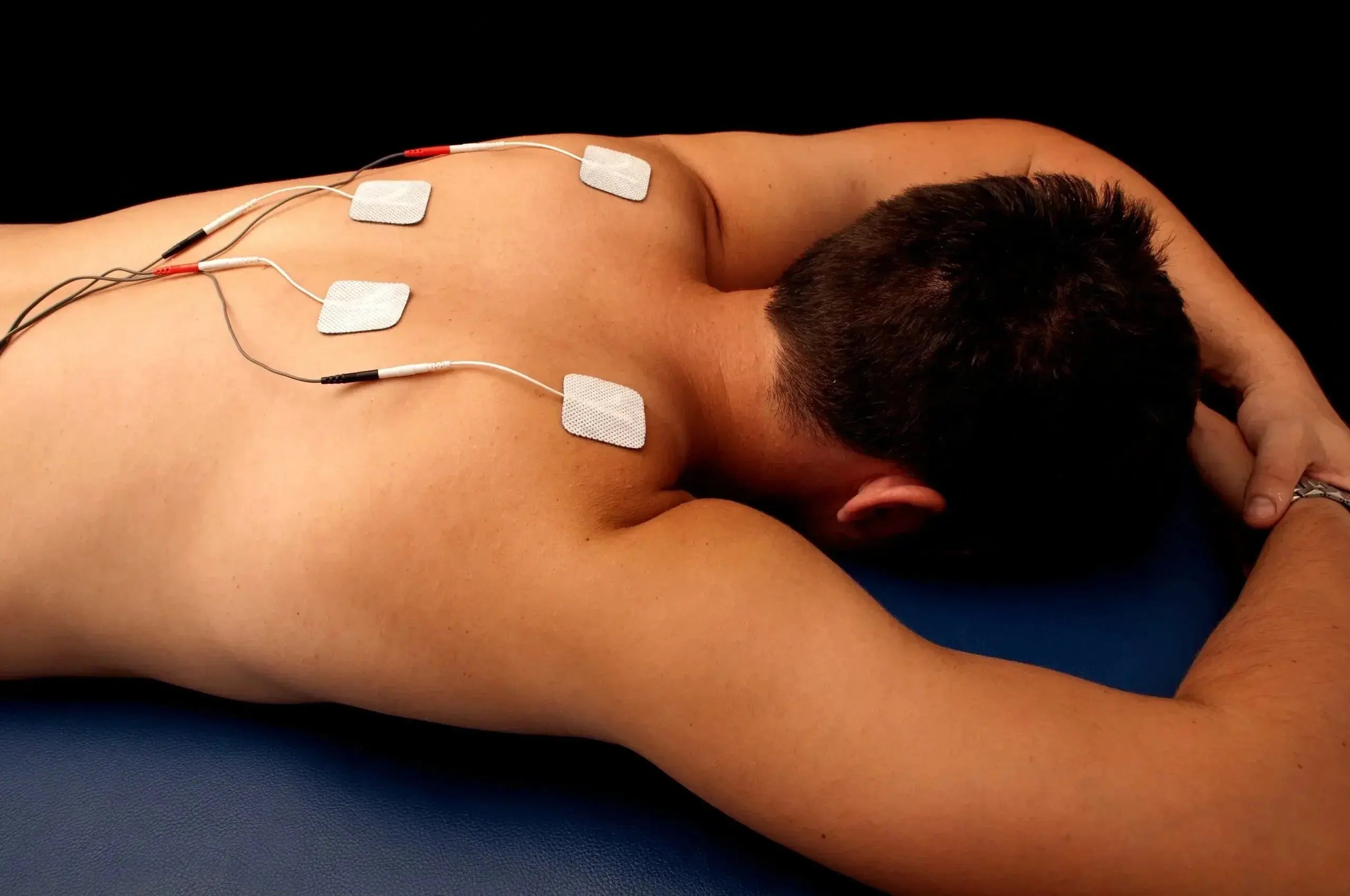
E-stim (electronic stimulation) sends mild electrical pulses through the skin to stimulate injured muscles to heal... or to manipulate nerves to reduce pain.
E-stim’s electrical impulses mimic your neurons’ own signals.They can target either nerves or muscles.
Impulses sent to the muscles trigger muscle contraction, much like flexing your biceps. Repeated muscle contractions improve blood flow and help repair injured muscles.
What’s more, repeated cycles of contraction and relaxation help build muscle strength.
For stroke survivors, E-stim can “re-train” muscles – which is a godsend for those who must suddenly relearn motor functions.
E-stim for pain works a bit differently. It targets the nerves instead of the muscle. And by doing do, it blocks pain receptors from sending pain messages from the nerves to the brain.

What to expect at an e-stim session
During an e-stim session, small electrodes are placed on your skin in the area receiving treatment. They’re small sticky pads that are easily removed after the session.
Wires from the device are attached to the pads.
Steady streams of electrical pulses move through the wires from the e-stim unit to your body.
For pain, pulses are aimed at the nervous system to block pain signals from reaching the spinal cord and brain. These pulses also trigger your body to produce more natural pain-relieving endorphins.
You might get a tingly “pins and needles” feeling at the site. In some types of e-stim you may get muscle twitches.
Many types of e-stim
There are several types of e-stim. You’d want to discuss options with a physician who practices e-stim. However, the two major ones are:
1. TENS – Transcutaneous Electrical Nerve Stimulation
TENS is used for both chronic, long-term pain and acute pain. Signals are targeted at nerve fibers to block or reduce the pain signals from reaching the brain.
2. EMS – Electrical Muscle Stimulation
EMS uses a slightly stronger current than TENS. It is targeted at muscle strength. Electrodes cause rhythmic contractions and when the user attempts to contract their muscle simultaneously, it builds muscle.
3. Other types
ESTR – Electrical Stimulation for Tissue Repair – helps reduce swelling, boost circulation, and speed wound healing
NMES – Neuro Muscular Electrical Stimulation – targets nerves in muscles to restore function/strength, reduce muscle spasms, and prevent muscle atrophy.
IFC – Interferential Current – Often used for low back pain, it helps decrease pain, relieve muscle spasms, and improve blood flow to certain muscles or tissues.
Russian stimulation – Similar to NMES. It improves muscle contraction. Russian stim uses a different form of wave that’s more tolerable for some people.
HVGC – High-Voltage Galvanic Current – Uses a combination of high-voltage and low-frequency electricity to more deeply penetrate your tissues. Useful for pain relief, blood flow, relief from muscle spasms, and improved joint mobility.
There are also implantable e-stim devices.

Is e-stim painful?
In a word, “No!”
The intensity of the e-stim is easily modified to patient tolerance.
Some patients feel a small sensation, such as “tingly,” “prickly,” or a “pins and needles” sensation.
Other benefits of electrical stimulation
Besides the aforementioned, e-stim also offers several benefits:
• Improved range of motion
• Increased circulation
• Better motor coordination
• Reduced muscle spasms
• Reduced, eliminated or more controlled pain
• Prevent/reverse muscle atrophy (such as following a fracture)
• Neuromuscular re-education
• Reduced swelling
When is e-stim NOT a good choice?
Some people should not pursue e-stimulation.
That includes those who are pregnant, or those with a pacemaker or other implantable heart device.
Other than that, the most common risk of e-stim is skin irritation where the electrodes were placed.
The bottom line
Electrical stimulation can help you relieve pain and may be a great adjunct therapy for other needs as well.
Some people feel better after just one e-stim session. However, experts advise you plan for multiple sessions.
Electric stimulation is considered an alternative or adjunctive therapy. Many conventional practitioners remain skeptical of its effectiveness.
For pain, e-stim can be effective for many conditions... although it’s typically used as part of a broader pain management plan.
According to this week’s podcast guest, Dr. Robert H. O’Dell, this treatment heals nerve pain or neuropathy better than other options he’s discovered. And since he’s been at this a long time, you’ll gain a lot from his experience.
So there’s no sense in quietly suffering when you could enjoy quick relief and get your life back to enjoy again.
Interested in learning more about e-stim? Listen to our podcast with guest Dr. Robert O'Dell, who is a big advocate of e-stim for his patients. He treats all sorts of neuropathies with e-stim.

Listen to today's mp3 here (30 minutes). Or at least get the 2-minute recap version here.

Share:
Hormones Driving You Crazy? How to Stop Them.
Do This for Your Cancer or Autoimmune Disease – Side Effects Excluded