
From blood sugar and insulin to digestion, inflammation, and that irresistible urge to nap, here's what's happening inside your body—and how to enjoy the feast without paying for it later.
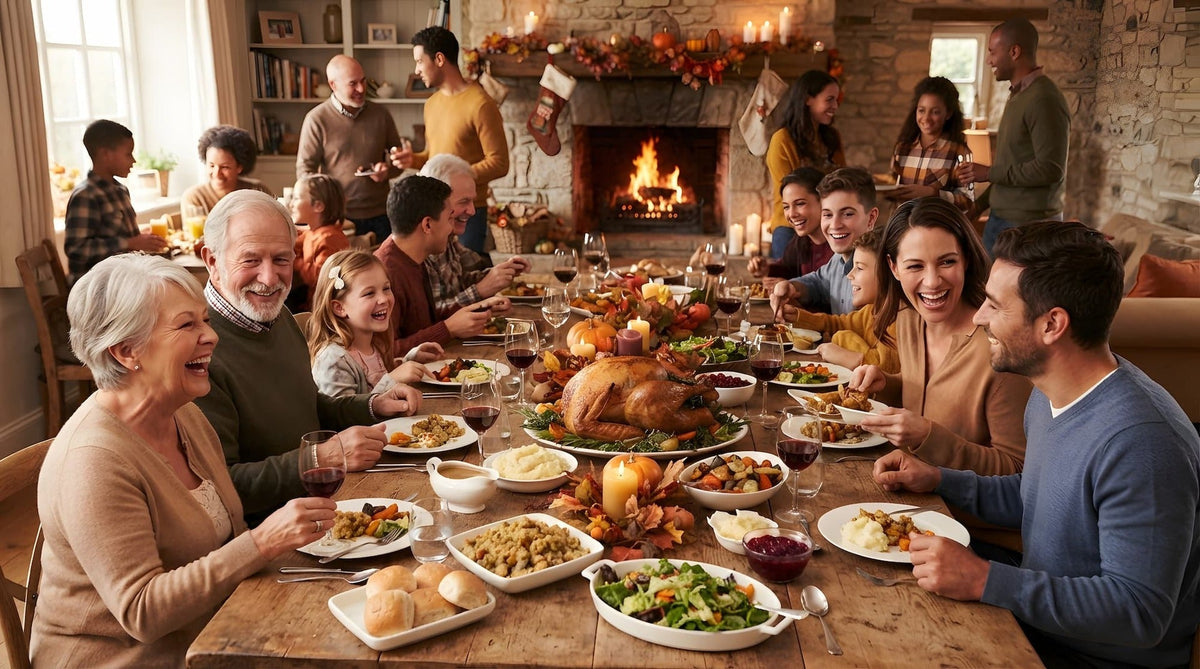
The turkey is carved. The mashed potatoes are swimming in gravy. There's stuffing, cranberry sauce, warm rolls, and at least three desserts nobody could agree to leave off the menu.
You've enjoyed a wonderful meal, perhaps a glass of wine, and some lively conversation. Now you're pleasantly full—maybe a little too full.
Someone suggests a walk. Someone else suggests pie.
And before long, half the family is settling into the couch, wondering why they suddenly feel so sleepy.
Sound familiar?
What you may not realize is that while you're deciding whether you have room for another bite of pumpkin pie, your body is already hard at work managing an extraordinary series of metabolic events.
Behind the scenes, your stomach, pancreas, liver, muscles, and brain are working together through a sophisticated network of hormones, enzymes, and chemical signals.
They're digesting food, absorbing nutrients, regulating blood sugar, processing fats, and deciding which energy to use now and which to store for later.
It's an impressive system, yet most of us give it very little thought.
So, what really happens inside your body after a big holiday feast?
Let's follow your meal from the first bite through the hours that follow.
The First 15 Minutes: Your Digestive System Gets to Work
Believe it or not, digestion begins before you've swallowed a single bite.
The sight and smell of food can trigger what's called the cephalic phase of digestion.
Your brain signals the digestive system to prepare for incoming food, stimulating saliva, gastric secretions, and other early responses.
Once you begin eating, the process accelerates.
Saliva contains an enzyme called amylase that starts breaking down starches. Your stomach begins mixing food with acid and digestive enzymes, gradually turning it into a semifluid mixture called chyme.
Meanwhile, your stomach expands to accommodate the meal.
That stretching activates specialized nerve endings that communicate with your brain, partly through the vagus nerve.
Your digestive tract also releases hormones involved in appetite and fullness, including cholecystokinin (CCK), glucagon-like peptide-1 (GLP-1), and peptide YY (PYY).
These signals help your brain recognize that you've eaten enough.
But here's the catch: fullness develops through several overlapping processes, and some take time.
If you're eating fast, distracted by conversation, or determined to sample every dish, you may consume more than you intended before those signals fully register.
The takeaway: Slow down and savor the food. Giving yourself time to enjoy the meal may also help you recognize when you're comfortably satisfied.
The Next 30–90 Minutes: Your Blood Sugar Begins to Rise
Now things get interesting.
Much of that holiday meal—potatoes, stuffing, rolls, sweetened cranberry sauce, and desserts—contains carbohydrates.
During digestion, digestible carbohydrates break down into simple sugars, including glucose, which the small intestine absorbs into the bloodstream.
As blood glucose rises, your pancreas releases insulin. Insulin acts as a metabolic traffic director.
It signals certain tissues, especially muscle and fat, to absorb glucose from the bloodstream. It also helps the liver store glucose and reduce its own glucose production.
Some glucose is used immediately for cellular activity. Some is stored for later use, primarily as glycogen in the liver and muscles.
This increase in blood sugar after eating is called the postprandial glucose response.
And it's completely normal.
Your blood sugar is supposed to rise after a carbohydrate-containing meal... to a degree. The key questions include:
-
How high it rises
-
How efficiently your body manages it
-
How long it takes to return to its usual range

Why the Same Holiday Dinner Affects People Differently
Two people can eat nearly identical meals and experience very different blood glucose responses.
Several factors influence what happens:
-
Insulin sensitivity: How effectively your cells respond to insulin's signals
-
Muscle mass: Skeletal muscle absorbs glucose after meals
-
Physical activity: Active muscles are better equipped to absorb and use glucose
-
Meal composition: Protein, fat, and fiber can influence how quickly carbohydrates are digested and absorbed
-
Metabolic health: Insulin resistance and diabetes can alter post-meal glucose regulation
Age also plays a role, but it’s not the only factor. As we get older, changes in muscle mass, physical activity, body composition, and insulin sensitivity can affect how efficiently our bodies process glucose. Even certain medications can increase insulin resistance and diabetes.
That’s one reason maintaining muscle mass becomes increasingly important after age 50.
Muscle does more than support strength and mobility. It also plays a vital role in metabolic health.
The takeaway: You don't necessarily have to eliminate holiday carbohydrates. Including protein and fiber-rich vegetables before eating your favorite starchy dishes can help create a more balanced response.
One to Three Hours Later: Your Liver Manages the Traffic
While your pancreas helps regulate your blood sugar, your liver is performing its own remarkable balancing act.
The liver is one of the body's most important metabolic processing centers.
After a meal, the liver helps manage incoming nutrients, stores some glucose as glycogen, and adjusts how much glucose it releases into the bloodstream.
But what happens when you've eaten more energy than your body needs immediately?
First, some of that energy gets stored for later use.
Glucose may replenish glycogen stores in the liver and muscles. Dietary fat can be stored in adipose tissue (belly fat), the body's primary long-term energy reserve.
When carbohydrate intake exceeds immediate needs and glycogen storage capacity, the body can also convert some carbohydrate into fat through a process called de novo lipogenesis.
However, this process isn't necessarily the dominant fate of extra carbohydrates after an ordinary mixed meal.
The body has multiple ways of managing incoming energy, and the balance depends on what you've eaten, your activity level, and your metabolic state.
What About That Glass of Wine?
If alcohol is part of the celebration, the liver has another job.
Alcohol is metabolized primarily in the liver, where enzymes convert it into acetaldehyde and then acetate.
Because the body cannot store alcohol the same way it stores carbohydrates or fat, it prioritizes breaking down and processing alcohol.
This temporarily changes how other fuels are processed and can reduce fat oxidation while alcohol is being metabolized.
Alcohol can also disrupt sleep later that night, even if it initially makes you feel relaxed or sleepy.
The takeaway: Your liver is remarkably adaptable, but it's not invincible. Occasional celebrations are different from repeatedly overloading the body with excess energy (food) and alcohol.

Two to Four Hours Later: Why Does Everyone Want a Nap?
Ah, the famous Thanksgiving food coma. For generations, turkey has taken the blame. But is it responsible?
The usual explanation is that turkey contains tryptophan, an amino acid your body uses to manufacture serotonin, which can then be converted into melatonin.
Since melatonin helps regulate sleep, the theory sounds plausible. But there's a problem.
Turkey doesn't contain unusually high amounts of tryptophan compared with many other protein-rich foods.
And eating more tryptophan doesn't automatically mean more serotonin or melatonin will be produced in the brain.
Tryptophan must compete with other amino acids to cross the blood-brain barrier, and the brain carefully regulates neurotransmitter production.
So, what's really happening?
The phenomenon has a scientific name: postprandial somnolence, meaning sleepiness after eating.
Researchers believe several factors may contribute.
Meal size: Large meals can influence digestive and metabolic signaling associated with post-meal drowsiness.
Time of day: Many people experience a natural dip in alertness during the early afternoon, even without a large meal.
Sleep debt: If you've been cooking since dawn, traveling, or staying up late with family, fatigue may finally catch up with you.
Alcohol: Even modest amounts can contribute to sleepiness and reduce alertness.
Individual metabolic responses: Changes in glucose and other metabolic signals may influence how some people feel after eating. However, the relationship isn't as simple as blaming a single blood sugar spike.
Interestingly, the old explanation that digestion makes you sleepy because blood is being diverted away from your brain is not accurate either.
Healthy circulation maintains blood flow to the brain even as digestive blood flow increases.
The takeaway: Don't blame the turkey. Your post-holiday-meal sleepiness probably reflects several overlapping influences, including the size of the meal, sleep history, possible alcohol, and your body's normal rhythms.
The Next Several Hours: Your Blood Fats Are Changing, Too
Most people have heard about blood sugar spikes.
Far fewer know that blood fats can also spike after eating.
When you consume dietary fat—from butter, gravy, creamy casseroles, pie crust, or other rich foods—your digestive system breaks it down and absorbs it.
Inside intestinal cells, much of that fat is repackaged into particles called chylomicrons.
Think of chylomicrons as tiny delivery vehicles that transport dietary fats through the bloodstream.
As they circulate, an enzyme called lipoprotein lipase helps release fatty acids for use or storage in tissues.
Following a fat-containing meal, blood triglyceride levels typically rise. This is called postprandial lipemia.
The response often develops over several hours, and triglyceride levels may remain elevated for four to six hours or longer, depending on the meal and the individual’s health status.
Why Should You Care?
Post-meal triglyceride responses are a normal part of digestion.
But unusually large or prolonged responses can be associated with insulin resistance and increased cardiometabolic risk.
Researchers are highly interested in triglyceride-rich lipoproteins and their remnants because these particles participate in atherosclerosis, the buildup of plaque in arteries.
That doesn't mean one rich holiday dinner causes heart disease.
It means the body's ability to process circulating fats is another important aspect of metabolic health.
And like blood glucose regulation, it is influenced by physical activity, insulin sensitivity, genetics, and long-term dietary patterns.
The takeaway: Metabolic health involves more than blood sugar. Your body's ability to manage fats after meals matters, too.
Can One Big Meal Trigger Inflammation?
Here's a question that may surprise you.
Can eating a large, rich meal temporarily influence inflammation?
Under some circumstances, yes. Researchers have observed changes in oxidative stress and inflammation following certain high-calorie or high-fat meals.
Oxidative stress occurs when reactive molecules exceed the body's ability to regulate them through its antioxidant defenses.
Inflammation is part of the body's normal response to injury, infection, and other challenges.
Both processes are essential to health when appropriately regulated.
But persistent, excessive oxidative stress or chronic inflammation can contribute to metabolic and cardiovascular problems.
Some studies suggest that large, energy-dense meals may temporarily increase certain inflammatory or oxidative stress markers, particularly in people with existing metabolic dysfunction.
However, results vary considerably depending on meal composition, individual health, and which biomarkers researchers measure.
It's also important to distinguish a temporary laboratory change from clinically meaningful harm.
One indulgent meal does not automatically create a dangerous inflammatory state.
The greater concern is the cumulative effect of dietary and lifestyle patterns that repeatedly challenge metabolic regulation.
And that's an important distinction during the holidays.
You don't need to fear every rich meal. But remember, the choices you make each day help influence how well your body handles occasional indulgences.

The Simplest Holiday Health Habit? Take a Walk After Dinner
Now for some genuinely encouraging news.
One of the most useful things you can do after a large meal doesn't require a supplement, a gym membership, or an elaborate exercise routine.
It simply requires getting up and moving.
When your muscles contract during physical activity, they can increase glucose uptake through pathways that don't depend entirely on insulin.
One important mechanism involves moving glucose transporter proteins, called GLUT4, toward muscle cell membranes, where they help bring glucose into the cells.
That’s one reason exercise is such a powerful tool for supporting healthy blood sugar regulation. And you don't need an intense workout.
Research suggests that even relatively brief periods of walking after meals for 10 minutes can improve post-meal glucose control compared with remaining sedentary.
In one randomized crossover study of people with type 2 diabetes, walking for 10 minutes after each main meal improved overall post-meal glucose control compared with taking one 30-minute walk at another time of day.
Other studies have found benefits from short bouts of light walking or simply interrupting prolonged sitting.
The practical message is straightforward: A comfortable 10–15-minute walk after dinner is a worthwhile habit.
👉 You don't have to walk fast.
👉 You don't have to burn off your meal.
👉 And you certainly don't have to treat exercise as punishment for enjoying dessert.
Invite a family member. Take the grandchildren. Bring the dog.
You might even discover that the post-dinner walk becomes one of your favorite holiday traditions.
Supporting Metabolic Health Beyond the Holiday Table
The physiology we've explored highlights something important: metabolic health involves much more than how much sugar you eat.
Your pancreas, liver, muscles, digestive tract, and other tissues work together to regulate glucose, process fats, and maintain energy balance.
That's why a comprehensive approach to metabolic wellness makes sense.
Adequate nutrition, regular physical activity, maintaining muscle mass, restorative sleep, and managing stress all contribute to healthy metabolic function.
Certain nutritional compounds have also attracted scientific interest for their roles in glucose and lipid metabolism.
For example, berberine, a plant-derived compound, has been studied for its effects on glucose regulation and insulin sensitivity.
Curcumin, the principal group of bioactive compounds found in turmeric, has been investigated for its antioxidant and metabolic effects. Research on these compounds is promising.

Where UltraMetabolic Fits In
UltraBotanica's UltraMetabolic™ combines UltraCur® curcumin and UltraBer™ berberine in one comprehensive formula.
It also features a proprietary blend of traditional Ayurvedic botanicals, including bitter melon, Ceylon cinnamon, and Eugenia jambolana.
The formula is designed to support healthy glucose metabolism, lipid metabolism, and blood sugar levels already within the normal range.*
Its multi-ingredient approach reflects the fact that metabolic wellness involves several interconnected systems rather than one single biochemical pathway.
UltraMetabolic™ is intended to complement healthy eating, movement, and other beneficial habits—not replace them.
And because the holidays are a time to celebrate both good food and good health, UltraBotanica is featuring UltraMetabolic™ as part of its seasonal Feast & Flourish offer (see below).
It's an opportunity to think beyond the holiday table and consider how you're supporting your metabolic health throughout the year.
UltraMetabolic is a dietary supplement, not a treatment for diabetes or other metabolic diseases.
Individuals taking blood sugar medications or other prescriptions should consult their healthcare professional before use, since berberine and other ingredients may lower blood sugar too much.
Seven Ways to Enjoy the Feast Without the Metabolic Hangover
The goal isn't to turn holiday dinners into a nutritional obstacle course. It's to enjoy the occasion while making a few smart choices your body will appreciate.
1. Don't Arrive at Dinner Ravenous
Skipping meals all day to save calories for the feast may leave you excessively hungry and more likely to eat past comfortable fullness.
A normal breakfast or light lunch can help you arrive ready to enjoy dinner rather than feeling desperate for food.
2. Start With Protein and Vegetables
Turkey, other protein-rich dishes, and fiber-rich vegetables can help create a more balanced meal.
Protein and fiber promote satiety, while the combination of nutrients affects how quickly carbohydrates are digested and absorbed.
You can still enjoy stuffing, potatoes, and dessert... after the protein and fiber.
3. Eat Slowly Enough to Really Taste Everything
Holiday meals often feature foods we enjoy only once or twice a year. So why rush through it? You have all day!
Slow down, savor the flavors, and give yourself opportunities to notice when you're satisfied.
4. Choose the Indulgences You Really Love
You don't have to sample every dessert simply because someone brought it. Maybe your favorite is your grandmother's pecan pie. Maybe it's the stuffing you've looked forward to all year.
Enjoy what matters most and skip what doesn't!
5. Think Twice About That Second Glass of Wine
Alcohol can add calories, influence metabolic processing, and interfere with sleep quality.
If you choose to drink, keep consumption modest—or opt for festive mocktails—which may help you feel better later.
6. Make Movement Part of the Celebration
A short post-meal walk supports glucose regulation and provides a welcome opportunity for conversation.
It may also help you feel more comfortable after eating.
7. Return to Normal the Next Day
There's no need for a punishment workout, extreme fasting, or a so-called detox cleanse.
Your liver and kidneys are already equipped to process and eliminate metabolic waste.
Simply return to your usual healthy routines: balanced meals, movement, hydration, and adequate sleep.
One holiday dinner does not require a dramatic reset.

One Meal Doesn't Define Your Health
It's easy to worry that one indulgent holiday dinner could undo months of healthy habits.
But human metabolism is designed to handle changes in food intake. Your body continually adjusts how it uses, stores, and releases energy.
After a large meal, blood glucose may rise more than usual. Triglycerides may remain elevated for several hours. You may feel uncomfortably full or sleepy.
These are physiological responses, not evidence that you've permanently damaged your health.
Of course, there's an important difference between an occasional celebration and a pattern of repeated overeating, excessive alcohol consumption, poor sleep, and inactivity.
Over time, those patterns can influence body composition, insulin sensitivity, cardiovascular health, and metabolic function.
But health isn't determined by what happens at one holiday dinner. It's shaped much more by what happens during the other 364 days of the year.
And there's another consideration worth remembering. Food is more than fuel. Holiday meals connect us with family traditions, childhood memories, cultural celebrations, and people we love.
The laughter around the table, the recipes passed down through generations, and the stories shared over dessert are meaningful parts of the experience.
Good health should help us enjoy those moments—not make us afraid of them.
The Bottom Line: Enjoy the Meal—Help Your Body Handle It
When you sit down to your holiday feast, consider everything your body is doing behind the scenes.
Your digestive system is breaking down food. Your pancreas is coordinating insulin release. Your liver is processing nutrients.
Your muscles are taking up glucose. And your body is carefully deciding how to use and store the energy you've consumed. It's a remarkable system.
And while you can't control every metabolic response, you can support the systems that make those responses possible.
Eat mindfully. Include nutritious foods alongside your favorites. Enjoy the people around you. And when the meal is over, invite someone for a walk.
Have the turkey. 🦃 Enjoy the pumpkin pie. 🥧 Savor the conversation.🧡
Then give your body a little movement and a return to its usual healthy routine. Because the best holiday traditions are the ones that nourish more than just our appetites!

Frequently Asked Questions
1. What happens to your blood sugar after a large holiday meal?
After a carbohydrate-rich meal, your digestive system breaks down all carbohydrates into sugars, including glucose, which enters your bloodstream.
Your pancreas responds by releasing insulin to help your cells absorb and use that glucose for energy. Some glucose is also stored for later use.
A temporary rise in blood sugar after eating is normal, but the size and duration of the increase depend on factors such as meal composition, insulin sensitivity, and physical activity.
2. Why do you feel so tired after a big holiday dinner?
Feeling sleepy after a large meal is called postprandial somnolence. It results from several factors, such as meal size, natural circadian rhythms, inadequate sleep, and alcohol consumption.
Although turkey often gets the blame because it contains tryptophan, its tryptophan levels aren't unusually high compared to other protein-rich foods.
Your post-meal sleepiness is more likely the result of other overlapping physiological processes as opposed to the turkey itself.
3. Can one big holiday meal negatively affect your metabolism?
A large meal can temporarily increase blood glucose, insulin, and triglyceride levels as your body digests and processes the food.
These are normal metabolic responses, although they may be more pronounced in people with insulin resistance or certain metabolic conditions.
One indulgent meal is unlikely to cause lasting metabolic harm in an otherwise healthy person.
Long-term metabolic health is influenced much more by consistent daily eating patterns, physical activity, sleep, and other lifestyle habits.
4. Does walking after a meal really help lower blood sugar?
Yes! Research suggests that even a short walk after eating can help moderate the rise in blood sugar.
When muscles contract during walking, they increase glucose uptake from the bloodstream through mechanisms that don't depend entirely on insulin.
A comfortable 10–15-minute walk after a holiday meal can be a simple way to support healthy glucose regulation, although individual responses vary.
5. What is the best way to support healthy metabolism during the holidays?
Focus on habits that support metabolic health throughout the season rather than trying to compensate for occasional indulgences.
Include protein and fiber-rich foods early in every meal, stay physically active, prioritize sleep, and be mindful of alcohol consumption.
Nutritional supplements containing ingredients such as berberine and curcumin have also been studied for their roles in metabolic health.
However, supplements aren't substitutes for healthy habits or medical treatment. The goal is to enjoy holiday traditions while maintaining a consistent daily foundation of metabolic wellness.


Share:
The Suprising Link Between Stress and Dopamine