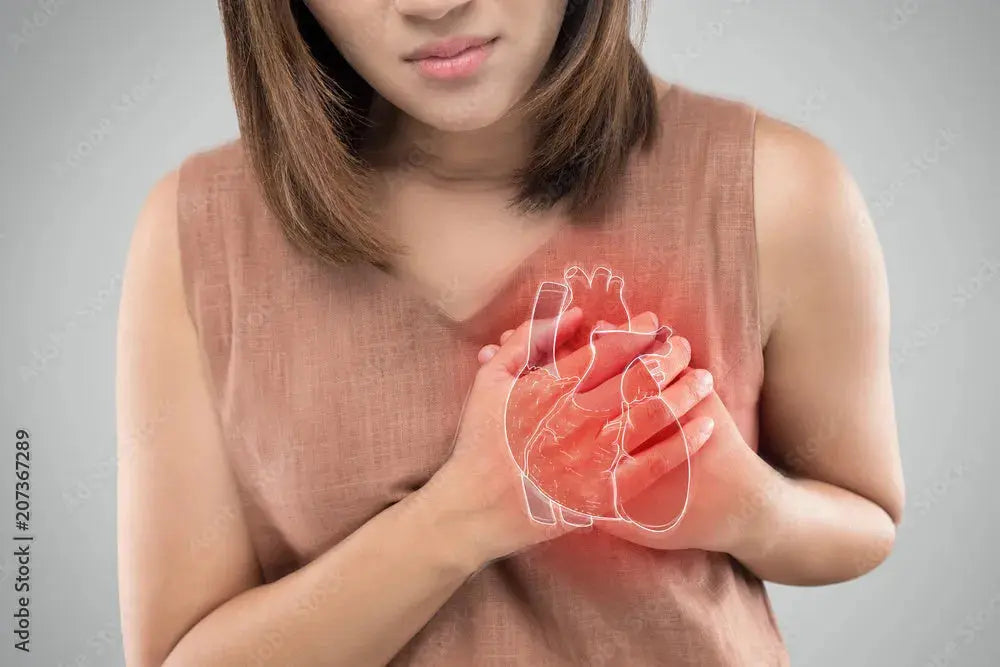
You’ve no doubt heard the idea of exercising to achieve great health... especially great heart health.
Well, what if you could achieve that great heart health without giving up three to five hours a week for exercise?
We’re not advocating that you stop exercising. However, studies suggest that if you dream of skipping exercise a couple days a week, you might be able to replace it with a supplement – curcumin.
And it’s a multi-targeted supplement that reduces many different heart-risk factors.
Heart disease, heart failure, stroke, kidney disease, retinal disorders and diabetes share common factors – declining heart function and the arteries (small and large) it supplies with blood.
Heart Disease Can Start in Your 20’s with Metabolic Syndrome
Cardiovascular disease (CVD) can start as early as your mid-twenties, long before you even have a hint of symptoms.
A key underlying factor contributing to CVD is metabolic syndrome – a combination of abdominal obesity, high blood pressure, glucose intolerance, and lipid imbalances.
These symptoms promote chronic inflammation and oxidative stress, which in turn set you up for atherosclerosis, reduced blood flow to vital organs, and higher risk of heart attack or stroke.[1][1][1]
In a nutshell, inflammation accelerates aging across the board.
That makes reducing inflammation one of the best ways to protect your heart. It allows your cells to heal naturally, recover lost function, and slow aging.
Human studies show that curcumin can cut chronic inflammation triggered by obesity and metabolic syndrome, and thereby mitigate some of the impact of high blood sugar.
If you go to PubMed and enter “curcumin anti-inflammatory,” you’ll get more than 15,000 results... an indication of how widely curcumin has been studied for its anti-inflammatory effects.

Curcumin Improves Endothelial Function
One reason exercise is so good for the heart is that it improves endothelial function.[2] Researchers studied curcumin for is improvements in endothelial health, and found it just as effective as exercise.[3, 8]
Studies show that curcumin also improves vascular function for healthy middle-aged and older adults.[3]
Curcumin Improves Atherosclerosis
If your doctor has said you have atherosclerosis – or you assume you do based on having metabolic syndrome, obesity, or high blood pressure – curcumin can help you fight that.[4-6]
Curcumin Contributes to Better Lipid Profiles
Another defining feature of metabolic syndrome is unbalanced lipid profiles – especially high triglycerides and high cholesterol/low HDL cholesterol.[7][7]
Curcumin’s effects on triglycerides is exciting, considering the small impact statin drugs have.[9][9][9]
In addition, curcumin improves the quality (but not necessarily the blood levels) of beneficial HDL cholesterol molecules.[10]

Curcumin and Diabetic Issues
Diabetes puts your heart at enormously greater risk of oxidative and inflammatory stress. Those with diabetes are two to three times more likely to die of CVD than non-diabetics are.[11]
Studies show that curcumin can prevent – or even reverse – the harm that contributes to CVD in diabetes.[5,12]
One randomized controlled clinical trial was done with subjects with type II diabetes. They either took 1.5 g/day of curcumin or a placebo for six months.[12][12][12][12]

Improves Blood Flow
Another well-known complication of diabetes is damage to tiny blood vessels, which contributes to retinal problems (and potential blindness), and heart and kidney disease.
Curcumin improves blood flow, which helps alleviate these types of complications.
A study in which one group received one gram per day of curcumin (enhanced for bioavailability) and the other group getting placebo showed no change in the placebo group after four weeks.
By contrast, the curcumin group showed significant improvements in blood flow and reduction in foot swelling. Additionally, they had significant increases in tissue O2 levels, a direct consequence of improved blood flow.[13]
Another Heart Protective Mechanism
A very serious consequence of chronically elevated blood sugar is heart and blood vessel damage... especially a heart condition called diabetic cardiomyopathy. This impairs both systolic and diastolic heart function.[11]
Curcumin inhibits oxidative stress caused by ongoing exposure to high blood sugar, preventing glucose-induced death of heart muscle cells.[14]
Curcumin Fights Glucose
Curcumin also directly fights numerous glucose-related mechanisms. That makes it a valuable adjunct to not only diabetics, but also to those who are “prediabetic,” or “borderline”
Importantly, curcumin reduces sugar-induced advanced glycation end products (AGEs). These age-accelerating compounds are damaging to prediabetics and non-diabetics also.[15]
When sugar molecules interact with proteins, AGEs form and trigger structural changes to the proteins. This could impact, for example, collagen on your artery walls... stiffening and thickening those proteins, causing stiff arteries, and reducing blood flow.

Why Healthy Adults Need Curcumin Too
Although you may think you’re healthy, you should take steps to guard your heart health. Even without risk factors, aging alone can cause structural and function changes in your arteries and its endothelial layer.
Impaired endothelial function has been implicated in many age-related disorders – such as atherosclerosis, hypertension, heart failure, ischemia (inadequate blood flow)... even Alzheimer’s and other conditions.
Curcumin improves endothelial function. This has been shown by studies comparing curcumin supplementation to physical exercise – which is a well-known way to improve endothelial function.
A study of healthy postmenopausal women showed that even a low dose of curcumin (150 mg/day) was as effective as moderate aerobic exercise for improving endothelial function.[16]
Another study with 150 mg/day showed that combining exercise and curcumin could reduce central (aortic) blood pressure, heart rate, and arterial stiffness. Exercise alone only reduced blood pressure in the arm.[17]
Curcumin also enhances nitric oxide (NO) production which improves blood flow.
Choose a Highly Bioavailable Form of Curcumin
Curcumin has been treasured to eons, and studied heavily for the past 40 years. However, absorption has been a long-standing problem.
Obviously, taking a curcumin product with excellent absorption properties such as UltraCür® curcumin is key to strategically protecting your heart. Many curcumin products lack these absorption abilities.
Protisorb™ enhances absorption 187 times more than that of unformulated curcumin. Piperine can affect drug metabolism and some people are sensitive to it, so it should be avoided.
If you’ve taken curcumin without experiencing much difference, maybe it’s time to check out UltraCur Curcumin powered by Protisorb™.


Share:
Functional Medicine: The New Model that Can "Reset" You Back to Your Prime
This “Guardian of the Genome” Highly Critical in Cancer Care and Prevention - Your TP53 Gene and Its Role in Cancer