

[Read time: about 2 minutes]
The old view of inflammation is that it was a stimulus to healing.
While that may be true to a certain point, that’s far from the whole story.
Most degenerative diseases are spurred by chronic, sub-clinical inflammation. And that can be a real bust for your health.
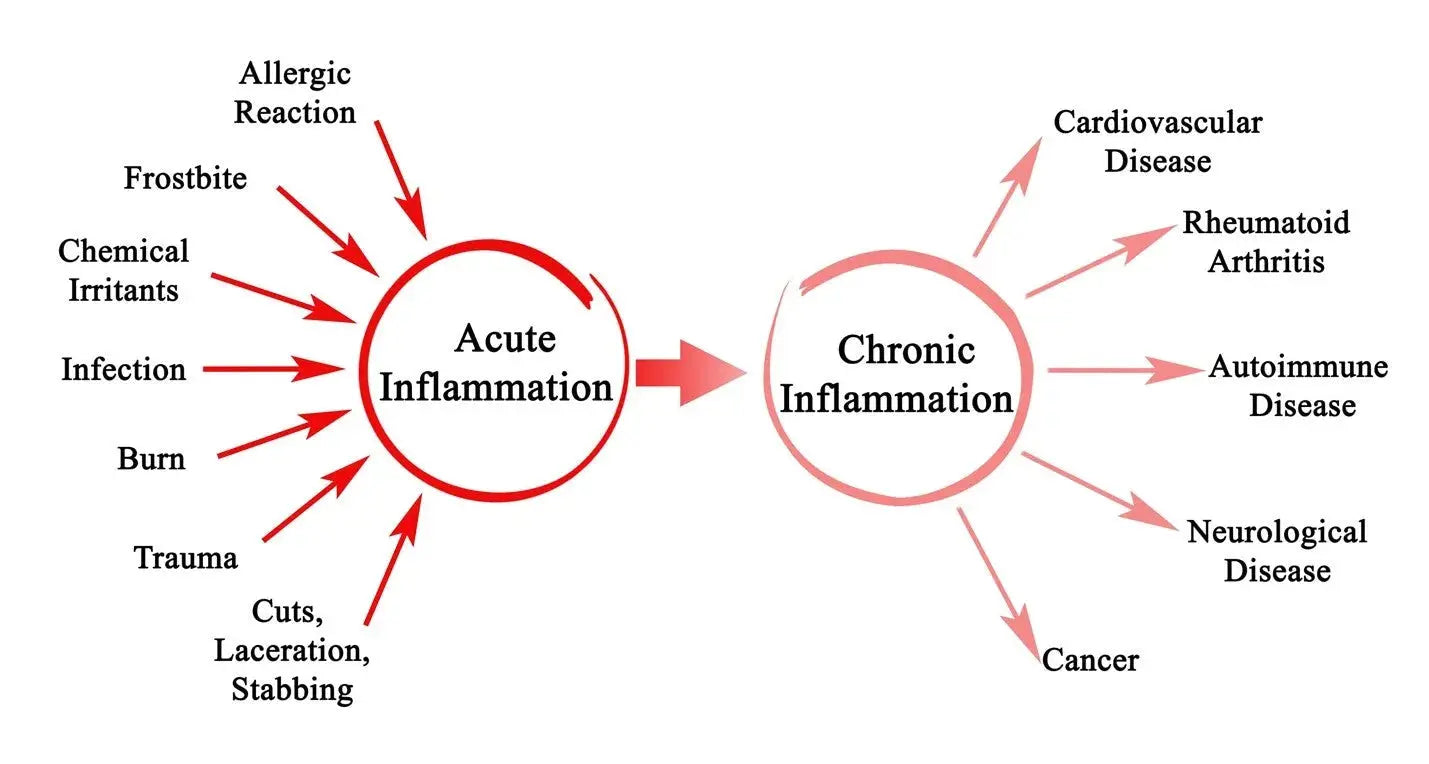
Inflammation can be defined as the body’s immune response to a harmful stimulus.
This inflammatory response can be either acute (short-term) or chronic (long-term).
Chronic inflammation is dangerous, as toxins and byproducts produced by the immune response start damaging healthy tissue.
Such ongoing inflammation is at the root of many so-called modern diseases, including cancer, diabetes, Alzheimer’s, arthritis, and more.
What causes inflammation in the cells?
When you have an injury or insult such as a burn or cut, your white blood cells, immune cells, and various pro-inflammatory molecules such as cytokines, COX enzymes, prostaglandins, and transcription factors (NF-kappa B/NF-kB), spring into action.
The problem is, when all those molecules fail to tamp down and instead remain in a heightened state of affairs, they start destroying your healthy cells.
For example...
In its normal state, NF-kB is bound tightly to its inhibitor (IkB, inhibitor of kB) inside the cytoplasm (the part of the cell between the nucleus and the outer membrane).
Injuries, stress, and free radicals can break your tightly-bound NF away from the IkB. The newly freed NF-kB then moves into the nucleus of the cell and activates genes that express cyclooxygenase-2 (COX-2)... which leads to chronic inflammation.
NF-kB activation is a major trigger of inflammation in many diseases. Inhibiting NF-kB helps prevent or delay disease onset.

One way to solve the problem
Many allopathic doctors prescribe or recommend non-steroidal anti-inflammatory drugs, also called NSAIDs.
NSAIDs target pro-inflammatory enzymes, and therefore may alleviate inflammatory symptoms.
But they can also lead to significant side effects including allergic reactions, kidney damage, stomach ulcers, heartburn, and bleeding.
This has driven the search for natural compounds that possess anti-inflammatory activities.

Seeking a more natural solution...
One of the most remarkable substances that possesses anti-inflammatory properties is curcumin.
Curcumin targets various inflammatory pathways in order to reduce inflammation:
• Transcription factor NF-kappa B)
• Cytokines (TNF-α, interleukins)
• Enzymes (such as COX-2 and lipoxygenase)
In addition, curcumin activates peroxisome proliferator-activated receptor gamma (PPAR-γ). PPAR-γ is another transcription factor that inhibits cytokines and thereby reduces inflammation.
Curcumin upregulates PPAR-γ to promote lower levels of inflammatory cytokines and overall inflammation.
The big problem with curcumin has been...
Due to curcumin’s unique chemical structure it’s very hard to absorb. It’s like a crystal. Curcumin and crystals are both insoluble in water.
In today’s podcast, Ultra Botanica’s CEO Adam Payne discusses the long journey toward finding a solubility solution for one of Nature’s best anti-inflammatories (assuming it’s bioavailable)...
How they took something that worked amazingly in a petri dish and enabled it to work inside the human body, finally.
Hear how they discovered the solution after decades of scientific research had failed to find one. And some of the adventures along the way.
If you’ve found this blogpost or the related podcast helpful and informative, please share with and forward it to friends so they can benefit too.



Share:
5 Great Reasons to Add Ginseng to Your Health Protocol
Got Ongoing Chronic Pain? 5 Ways to Enjoy Pain Relief