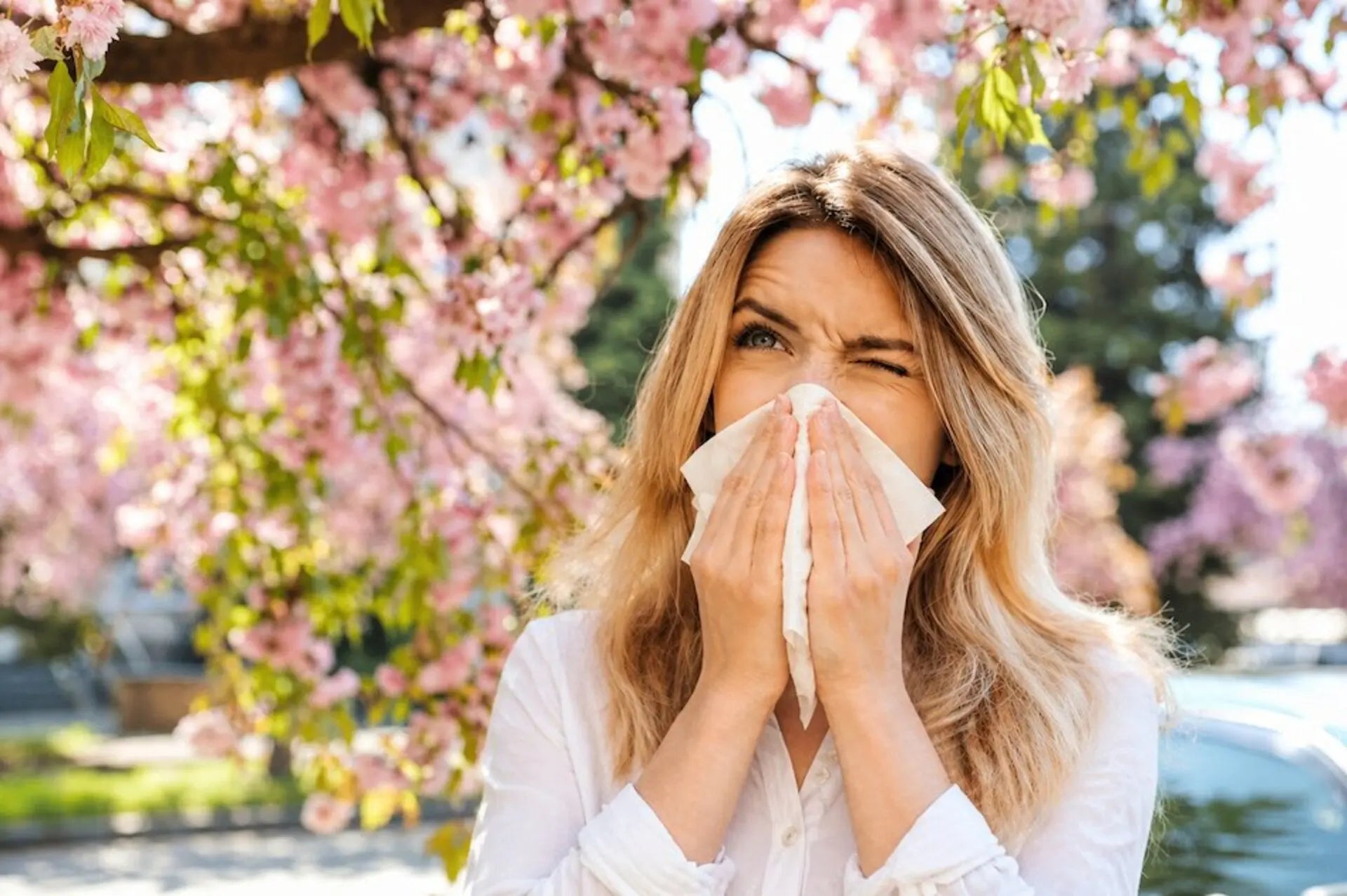
If your eyes itch, your nose runs, and your head feels stuffy every time pollen counts rise or you’re exposed to pet dander, you’re not alone.
Seasonal allergies are incredibly common, and many people seek natural ways to support a calmer, more balanced immune response.
One natural compound that gets a lot of attention in this area is quercetin, pronounced "kwur-suh-tin."
Quercetin is a flavonoid, which means it is a plant compound found in foods such as onions, apples, berries, grapes, and leafy vegetables.
Flavonoids are known for their antioxidant and cell-protective properties.
Quercetin has been studied for its role in supporting a healthy antioxidant balance, cellular support, and an optimal immune response to environmental triggers.
Recent reviews suggest quercetin may offer support for allergy relief, likely through its effects on mast cells, histamine signaling, and immune balance.
However, large, definitive human trials are still limited. That means quercetin should not be considered a cure for allergies.
Rather, it may serve as a supportive ally and useful supportive nutrient for people who want to help their bodies respond to seasonal and environmental challenges in a natural, healthy way.
A 2022 placebo-controlled human trial found that a quercetin-containing supplement improved some hay fever-related symptoms. A 2025 review also concluded that it is promising but still preliminary.
What Is Quercetin
Quercetin is a naturally occurring plant nutrient with antioxidant properties.
An antioxidant is a substance that helps neutralize unstable molecules which can place stress on cells and organs.
Quercetin is found in many plant foods, but the amounts from food alone are often modest, which is one reason it’s commonly used in supplement form.
Reviews also note that quercetin has relatively poor natural bioavailability on its own, meaning the body doesn’t absorb and use it efficiently.
That last point matters. Quercetin’s benefits on paper are only part of the story. If a product is not absorbed well, the real-world benefits may be less impressive.
That’s why Protisorb™ is so important. (More on that in a moment.)
Why Quercetin Comes Up in Allergy Conversations
Most allergy symptoms are not caused by the allergen itself. They’re caused by your immune system’s reaction (or hyped up reaction) to the allergen.
When your body treats something like pollen, dust, or pet dander as a threat, it sets off a chain reaction of immune events. That chain can involve:
- Mast cells
- IgE antibodies
- Histamine
- Signaling molecules called cytokines
- Shifts in immune balance, including Th1 and Th2 responses
Quercetin is interesting because research suggests it may support a healthier response at several points along that chain rather than acting in only one place.
Preclinical and review literature describe effects on mast cell activation, histamine release, IgE-related pathways, and Th1/Th2 immune balance.
Let’s break down those terms in plain English. 😊

What Are Mast Cells
Mast cells are immune cells that sit in locations such as the skin, nose, lungs, and digestive tract. Think of them as part of your body’s alarm system.
When mast cells sense something they view as a threat, they release chemicals such as histamine.
Histamine is one reason allergy symptoms can include sneezing, itchy, watery eyes, runny nose, swelling, and congestion, and is also a reason antihistamines are so popular.
This release process is sometimes called degranulation, which is a technical way of saying that the mast cell dumps out its stored chemical messengers.
Quercetin has attracted attention because it’s been shown in lab and preclinical research to help stabilize mast cells, meaning it may help make them less likely to overreact and release histamine and other compounds.
That mast-cell-stabilizing concept is one of the main reasons quercetin is often described as a “natural antihistamine,” though that phrase oversimplifies the science.
What Are IgE Antibodies
IgE antibodies are a type of immune protein involved in allergic reactions.
An antibody is a protein your immune system makes to recognize foreign substances.
In allergy-prone individuals, IgE can contribute to an exaggerated response to otherwise harmless substances such as pollen and pet dander.
IgE cells are also implicated in both milk and wheat allergies, as these food allergies often involve an overreaction of the immune system that leads to the production of IgE in response to proteins found in these foods.
IgE binds to mast cells, and when the allergen shows up again later, that bond helps trigger histamine release. In simple terms, IgE helps “prime” the allergic response.
Some quercetin research suggests it may help support healthier IgE-related immune signaling and a more balanced response to allergens.
Most of this evidence is still preclinical, but it is one of the pathways researchers are actively investigating.
What Do Th1 and Th2 Mean
This is one of those terms that sounds intimidating... but it’s easier than it sounds.
Th1 and Th2 are two broad patterns of immune activity. “Th” stands for T helper cells, which are white blood cells that help coordinate immune responses.
A simple way to think about them:
-
Th1 responses are often used for fighting viruses and certain intracellular threats.
-
Th2 responses are more closely associated with allergy signaling and antibody-driven responses, especially those involving IgE.
The body needs both. Problems can arise when the immune system tilts too far in one direction.
In many allergic reactions, researchers talk about a Th2-dominant response, meaning the immune system is leaning too heavily toward allergen-related signaling.
Newer research suggests quercetin may help support a healthy Th1/Th2 balance. A 2023 study in allergic rhinitis (hay fever) reported that quercetin improved Th1/Th2 and Treg/Th17 balance in the studied model.
This helps explain why quercetin remains a compound of such high interest in allergy research, as it may help support a more balanced immune response without “fixing” the immune system per se.

How Quercetin May Support Allergy Relief
Based on current research, quercetin’s allergy-support potential appears to center on a few key actions.
1. It May Help Stabilize Mast Cells
As discussed above, mast cells are central players in allergy symptoms.
Quercetin has been shown in lab and preclinical research to reduce mast cell activation and degranulation, which may help lower the release of histamine and other provocative compounds.
2. It May Help Moderate Histamine Release
Histamine is one of the best-known provocative chemicals involved in allergy symptoms.
Quercetin is not as fast-acting as a drug, but it may help support a healthier histamine response by influencing mast cells and other internal signals.
3. It May Help Support Th1/Th2 Balance
Because allergic conditions are often associated with an overactive Th2-type response, quercetin’s potential role in supporting a healthier Th1/Th2 balance is especially relevant.
This is one of the more mechanistically interesting areas of the research.
4. It May Help Support Balanced IgE Activity
IgE is not “bad.” It has normal roles in immunity. But when IgE-related signaling becomes exaggerated in response to harmless triggers, allergy symptoms can follow.
Quercetin may help support more balanced IgE-related immune activity, based mainly on preclinical evidence.
5. It Offers Antioxidant Benefits
Allergy symptoms are not only about histamine. They also involve oxidative stress and signaling in tissues such as the nasal passages.
Quercetin has antioxidant properties that may help support tissue comfort and resilience during seasonal challenges.
What Does the Human Research Actually Say
This is where it’s important to stay grounded.
The human evidence for quercetin and allergies is encouraging, but not conclusive.
A 2025 systematic review and meta-analysis on polyphenolic compounds in allergic rhinitis (hay fever) suggested these compounds may help reduce nasal symptoms, especially in seasonal hay fever.
However, the review also noted inconsistency across studies.
A 2022 placebo-controlled trial found that repeated oral intake of a quercetin-containing supplement improved some symptoms associated with hay fever.
That’s promising, but it’s still not the same as having multiple large, gold-standard clinical trials proving that quercetin reliably relieves allergies in everyone.
That said, it’s hard to get those gold standard clinical trials because the price point of a natural compound doesn’t facilitate the high cost of doing large clinical trials. And the preliminary studies are promising.
So, the most honest way to say it is this:
Quercetin may help support healthy immune balance and seasonal comfort, especially through its effects on mast cells, histamine signaling, and allergy-related immune pathways.
Still, it should be viewed as supportive nutritional care. As should all supplements, for that matter.
Why Absorption Matters So Much
One of the biggest practical issues with quercetin is its poor bioavailability.
Bioavailability means how much of a nutrient gets absorbed and becomes available for the body to use. Quercetin is widely recognized as a compound with poor natural bioavailability.
That's why newer reviews place so much emphasis on formulation science and enhanced-delivery approaches such as Protisorb™.
In other words, a quercetin product is not just about how many milligrams are on the label. It’s also about how much of it the body absorbs effectively.

Introducing UltraAllergy™
For people looking for a quercetin product designed specifically for immune and seasonal support, UltraAllergy™ combines quercetin plus NAC (N-Acetylcysteine) for healthy immune responses.
UltraAllergy™ supports histamine balance, Th1/Th2 balance, IgE balance, and mast cell stability.*
NAC is an amino acid that serves as a building block for glutathione, one of the body’s major antioxidant compounds.
While UltraAllergy™ is focused on quercetin, the inclusion of NAC adds another layer of nutritional support for antioxidant balance.
This can be relevant because oxidative stress and irritated tissues often go hand in hand with seasonal immune challenges.
Just as importantly, Ultra Botanica’s Protisorb™ technology is used to support absorption of low-bioavailability polyphenols such as quercetin.
Protisorb™ is a protein-scaffold technology designed to mimic natural nutrient transport and enhance the absorption of difficult-to-absorb plant compounds.
Because quercetin is known to be poorly absorbed in ordinary form, the Protisorb™ focus matters. UltraAllergy™ is designed to improve quercetin absorption, which is a meaningful advantage.
Who Might Consider Quercetin Support
Quercetin may be worth discussing with a healthcare professional if you’re looking for nutritional support for:
- Seasonal pollen sensitivity
- Occasional histamine-related discomfort
- Immune optimization during high-exposure times of year
- Broader antioxidant support alongside seasonal wellness habits
That said, quercetin is not right for everyone. People taking medications, especially multiple prescriptions, should check with their medical practitioner for interactions first. And anyone with severe or escalating allergy symptoms should seek proper medical care.
Everyday Habits Still Matter
Even the best supplement works best in the context of good basics.
If you want a calmer seasonal allergy season, remember the foundations:
- Reduce exposure when possible
- Rinse allergens from hair and clothing
- Use a HEPA air filter where you spend most of your time
- Support sleep and stress resilience
- Eat a lot of colorful plant foods and onions
- Stay hydrated
- Consider a targeted, well-formulated supplement
Supplements can support the system. But they don't replace the system.
Final Thoughts
Quercetin is one of the most interesting natural compounds in the allergy-support conversation because it appears to work across multiple related pathways.
Research suggests it may help support mast cell stability, histamine balance, healthier IgE-related signaling, and a more balanced Th1/Th2 immune response.
That means that quercetin isn’t just another generic antioxidant. It’s a flavonoid with a biologically plausible role in supporting seasonal comfort and healthy immune balance.
The biggest catch is absorption. Quercetin’s bioavailability is limited, so formulation matters.
That’s why a product like UltraAllergy™, which uses Protisorb™ technology to support absorption, deserves attention as a thoughtful approach to quercetin supplementation.

Frequently Asked Questions
1. What does quercetin do for allergies?
Quercetin may help support a healthier immune response to seasonal and environmental triggers by promoting mast cell stability, supporting histamine balance, and encouraging a balanced inflammatory response.
For that reason, it is often used as a natural nutritional option for seasonal comfort.
2. When should I take quercetin for seasonal allergies?
Quercetin is usually best thought of as a broadly supportive supplement, not a fast-acting rescue product.
Many clinicians suggest starting quercetin before your usual allergy season begins, because seasonal allergy strategies often work better when started early rather than after symptoms are already intense.
This fits with how quercetin is studied... it appears to support mast cell stability and a healthier histamine response over time, not give immediate relief once an imbalance has occurred. .
3. How long does it take for quercetin to help calm allergy symptoms?
Quercetin is not known for instant relief. Human and review literature suggest it may take days to a few weeks of consistent use to notice meaningful support, especially for seasonal allergy patterns.
That’s one reason many people use it as part of a broader seasonal wellness routine rather than waiting until symptoms are already at their peak.
4. Is quercetin a natural antihistamine?
Quercetin is often described as a natural antihistamine, but the better explanation is that it may help support healthy histamine balance by influencing mast cells, the immune cells that release histamine during allergic responses.
Quercetin is not the same thing as an over-the-counter antihistamine drug. Current reviews describe it as promising but still preliminary for allergy support.
5. Should I take quercetin every day during allergy season?
Many people use quercetin consistently during peak pollen months rather than only on bad days, since its benefits appear to be more supportive and cumulative than immediate.
That said, the right routine depends on the product, the dose, your overall health, and whether you take medications, so it’s wise to follow label directions and check with your healthcare professional.
6. Why does quercetin absorption matter for allergy support?
Quercetin has a reputation for poor natural bioavailability, which means the body may not absorb and use it efficiently in its ordinary form. That’s why delivery systems and formulations matter.
Better-absorbed quercetin, such as with the use of Protisorb™ technology, may be more useful in practice than a standard form that looks good on the label but is less available to the body.



Share:
Free Radicals and Oxidative Stress: What They Are—and 11 Smart Ways to Reduce the Damage
Why More People Are Turning to NAC for Antioxidant Support and Allergy Relief