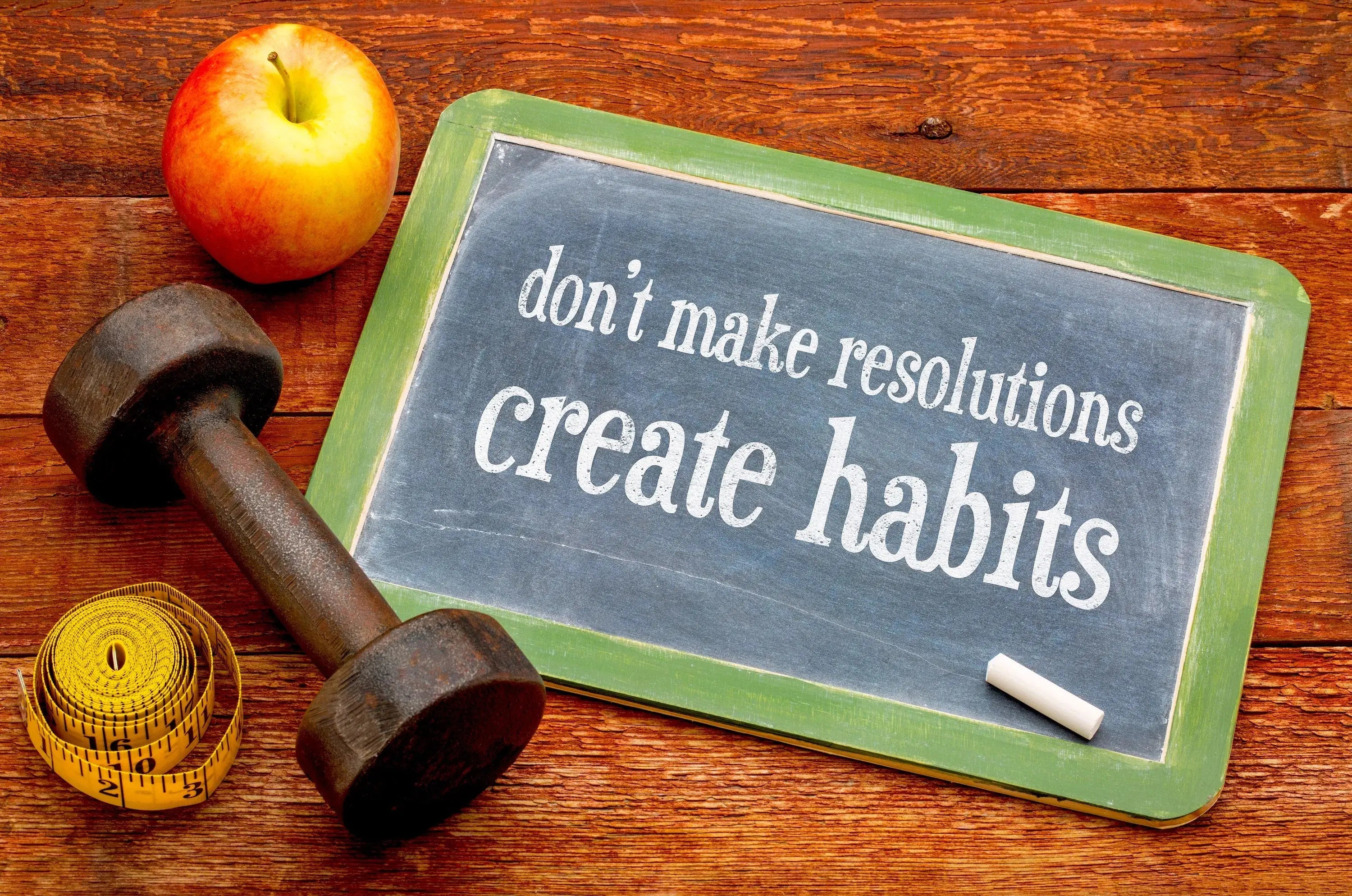
HINT: Turns out it’s not 21 days – contrary to popular belief!
The 21-day concept was the brainchild of American plastic surgeon and author Maxwell Maltz, who proposed the 21-day idea in his book Psycho-Cybernetics.
It’s a tremendously popular idea to think that in just three weeks you could develop transformational habits. Who wouldn’t sign up for that?
A More Realistic Timeline...
You may wonder just how long it takes to create a new habit or replace a bad habit. The answer – based on 2010 research – is 18 to 254 days. Average = 66 days. It varies greatly by difficulty of the new habit and personal traits such as motivation.
Developing new habits requires planning, setting new triggers, and forced repetition – till you do it without thinking.
For example, if you work out for the first 21 days of January, there’s a pretty good chance you’ll do so on the 22nd too. Still, it’s not like doing it daily for 66 days. Or 254 days.
Your Brain Makes Fewer Decisions Than You Think!
Most of what you do in life is strictly habitual. We’re creatures of routine. Neurobiologists say that 45 to 95% of our lives are ruled by habit. You get in the car, put on your seatbelt, and check your mirrors, all without a thought.
In fact, your entire morning routine is likely performed out of habit.
Habits are automatic behaviors your brain doesn’t need to think about. Or you may only think about it at the beginning and ending of a group of tasks like this.
Have you ever driven to work, only to realize you don’t even know how you got there? That means you were on autopilot. Habit.
When you learned to drive, each step that became your driving habit was calculated and intentional.
The same applies to many skills, from a baby learning to walk, to being able to walk while chatting with a friend or listening to a podcast. Walking is so second-nature you hardly give it a thought.
Making decisions is hard work. Decisions require time and effort. Living via habits makes life efficient. Often our habits serve us well. But sometimes they don’t. And that’s what many people realize as we begin a new year.

How to Form New Habits in 2025 and Beyond
If you’re trying to ditch a bad habit or form a new good habit in 2023, 2024, 2025, or beyond, you’re in good company. Here’s how to make it happen:
- Plan a trigger to associate with the new action (i.e., work out right after your alarm rings).
- Assess your motivation level.
- Post a photo of your achieved goal on the refrigerator or a vision board.
- Focus on intermediate milestones instead of one giant leap. (i.e., lose 8 pounds per month, not lose 96 pounds. It’s much easier to wrap your head around.)
- Use the buddy system. You lift each other up, and hold each other accountable.
- Enlist a little extra help when called for. For example, if you’re trying to lose weight or manage your blood sugar, it’s not a crime to enlist the help of a supplement like UltraMetabolic™.
- Trust the process. If you mess up for one day, all is NOT lost! You’ve gained ground all along. Don’t give up. Every time you repeat the action, your dopamine reinforces it. Keep going.

Focus on SMART Goals
Get active with your goal-setting. We tend to set passive goals and then wonder why we don’t achieve them.
Set SMART goals, and then measure your progress toward each one daily. What’s a SMART goal?
- Specific – “Get more exercise” is vague. “Walk 10,000 steps per day” is specific.
- Measurable – Did you do it or not?
- Achievable – Losing 8 pounds/month is reasonable... losing 35 pounds in a month is not.
- Realistic – Goes hand-in-hand with achievable
- Time-constrained – When will this be accomplished? Give it a deadline.

3 Habits that Will Boost Your Wellness in 2023, 2024, 2025 and Beyond
Good habits can make a monumental difference in your life. Here are three simple health habits to add to your list of health goals for the next 6 months to year.
- Walk 10,000 steps a day. This is a “capstone” habit – one that will encourage other healthy behaviors such as eating a healthier diet, drinking more water, and spending time outside. Use a pedometer or smartphone app to track your steps. So you can answer the "measurable" question.
- Drink water, not calories. High-calorie drinks do not satiate, so you keep on consuming them without realizing how many empty calories you’re drinking.There’s no fiber in apple juice, for example, to slow the emptying of all those sugars into your bloodstream... whereas when you eat an apple, it’s more satiating due to the fiber content.
Incidentally, artificial sweeteners try to “trick” the brain into thinking it’s getting sugar. But your brain isn't fooled. Ample evidence shows that drinking artificially-sweetened beverages leads to more sugar consumption and weight gain, not weight loss.
- Practice gratitude. If we focus on the negative and what we don’t have, we’ll always see life as coming up short. Which creates stress and dissatisfaction in our lives.
Instead, write a list of the things you’re grateful for every morning for the next 90 days. It’ll set every day off on a very positive trajectory, and establish the habit of thinking positively for the coming months and years.
Source: How are habits formed: Modelling habit formation in the real world. Research at University College London, London, UK. Published in Eur. J. Soc. Psychol. 2010.



Share:
How Genetic Mutations Cause or Prevent Disease
Is Chelation Therapy for Heart Disease a Good Idea?