
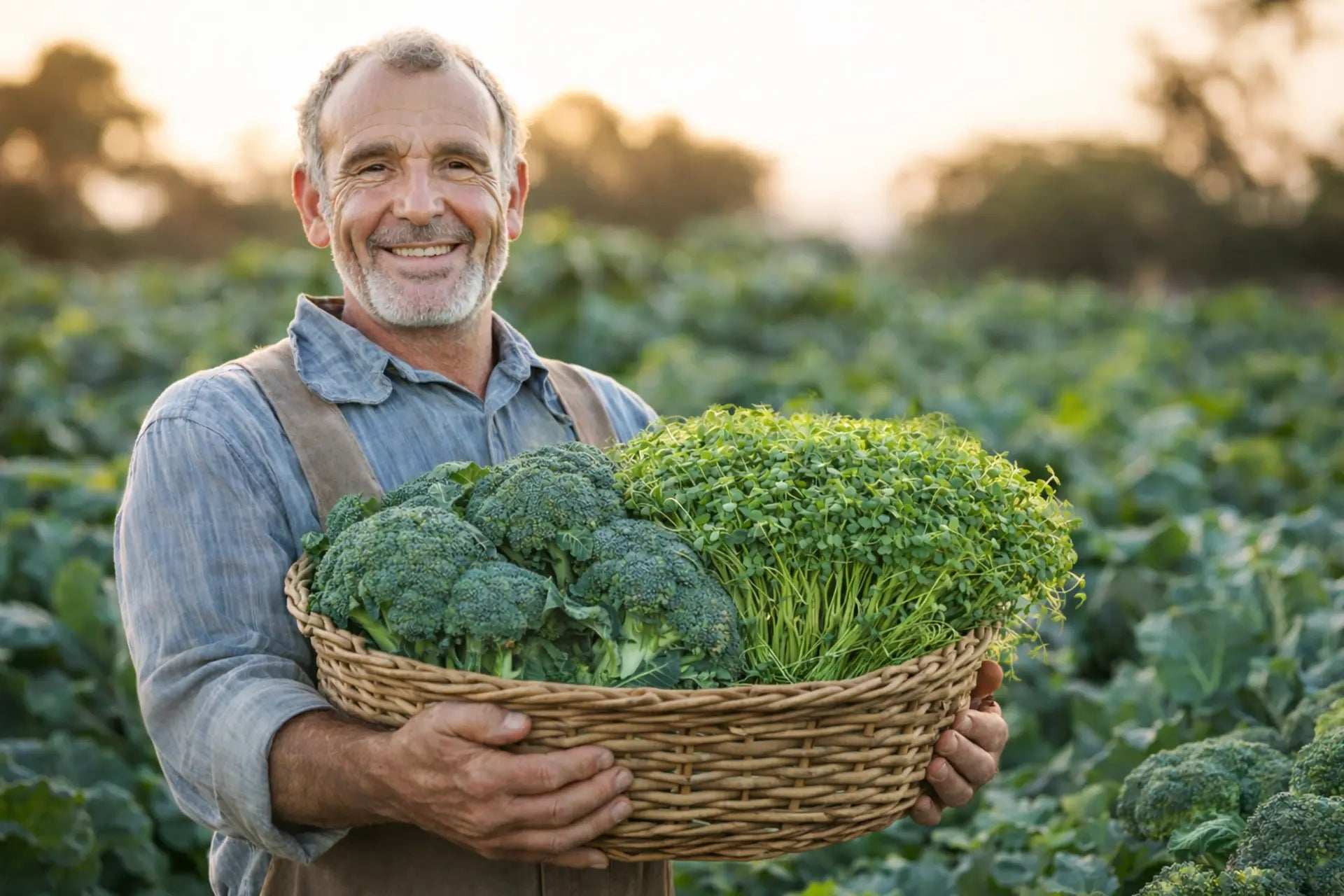
If you’ve ever wondered why broccoli gets so much love—and why broccoli sprouts spark even more excitement—you’re in the right place.
Both come from the same plant (Brassica oleracea var. italica), yet they differ dramatically in phytochemical density, how your body converts key precursors, and how you should prepare them to get the most out of every bite.
Below is a practical, plain-English guide to the science (without hype), the kitchen techniques that matter, and a simple sprouting how-to you can do on your countertop in a week.
The Short Answer: Why So Much Attention on Sprouts?
Broccoli and broccoli sprouts both contain glucoraphanin, a stable glucosinolate that can be converted into sulforaphane.
In turn, sulforaphane is a small, pungent isothiocyanate your cells use to activate Nrf2, a master switch that upregulates Phase II “detox” enzymes (e.g., NQO1, GST) and supports glutathione antioxidant defenses.
Sulforaphane has also been studied for helping maintain a healthy inflammatory balance and general cellular resilience.
Broccoli sprouts (3–5 days old) contain many times more glucoraphanin than mature broccoli florets.
That means an ounce of sprouts can deliver a sulforaphane level that would take cups of cooked florets to match—if you mind a few key preparation details.

Broccoli vs. Broccoli Sprouts: What’s the Real Difference?
Phytochemical Density
Sprouts contain very high glucoraphanin concentration for their weight. You also get active myrosinase (the enzyme that converts glucoraphanin → sulforaphane) because sprouts are raw and the myrosinase enzyme is heat sensitive.
Mature broccoli is still good! It provides glucoraphanin plus fiber, vitamin C, vitamin K, folate, and other polyphenols. But myrosinase is easily deactivated by heat, and the glucoraphanin concentration per bite is lower than in sprouts.
Consistency of Conversion
Sprouts (raw) have built-in myrosinase, which often means reliable sulforaphane generation in the mouth and stomach.
Broccoli (cooked) offer some myrosinase with light steaming, or you can add a raw myrosinase source(mustard powder, daikon, arugula, radish) to cooked broccoli to restore conversion.
Your gut bacteria can convert some glucoraphanin too, but the amount varies from person to person.
Practicality
Sprouts are fast, inexpensive, and fresh year-round; ready to eat right from the jar you make them in.
Broccoli is readily available, easy to cook for family meals, and more filling... but you need to be mindful of heat and finishing touches to keep the myrosinase pathway active.
If your goal is maximizing sulforaphane potential per bite, sprouts win.
If your goal is building a broadly nutritious plate (fiber, vitamins, minerals) with consistent habits, both sprouts and mature broccoli shine—especially if you use the right prep techniques.

How the Compounds Work (In Plain English)
Glucoraphanin is a stable precursor (as in “ingredient waiting to be activated”).
Myrosinase is the enzyme (the chef) that converts glucoraphanin into sulforaphane (the finished dish).
Sulforaphane then activates Nrf2, which turns on genes that upregulate Phase II detox enzymes (e.g., NQO1, GST, UGT) which supports safe conjugation and clearance of electrophiles and oxidants, and bolsters glutathione antioxidant defenses.
This supports normal cellular housekeeping under everyday stressors and helps maintain a healthy inflammatory response after routine activity.
That’s a mouthful, so here’s the elevator version:
Eat the precursor (glucoraphanin) with access to the enzyme (myrosinase) to yield sulforaphane, which then helps your cells turn on detoxification and protection systems.
“Health Support” Snapshot
Regularly including broccoli/broccoli sprouts in a balanced diet can help to:
- Support cellular detox pathways by upregulating Phase II enzymes.
- Maintain glutathione antioxidant defenses and redox balance.
- Support a normal inflammatory response after everyday activity.
- Complement metabolic wellness (when paired with healthy diet and movement).
None of this is a disease claim; it’s about supporting normal physiology your body already performs. Food is not medicine—but it can be an incredibly helpful ally.
How to Grow Broccoli Sprouts at Home (1 Jar, 7 Days, <$10)
To grow broccoli sprouts you’ll need:
- 1 wide-mouth quart mason jar.
- 1 sprouting lid or a piece of clean mesh secured with a ring.
- 2–3 tablespoons broccoli seeds (sprouting-grade).
- Clean water and an interior space for the first few days.
Day 0 (Soak):
Add seeds to jar, cover with cool water (2–3 inches above seeds), and soak 8–12 hours.
Days 1–6 (Rinse & drain):
Each morning and evening, fill the jar with cool water, swirl, drain thoroughly, and store the jar inverted at a 45° angle so excess water escapes (a dish rack works).
Keep out of direct sun for the first few days. Shake well to fluff after draining. Good drainage is everything and poor drainage can make the sprouts rot.
Day 3–5 (Greening):
When tails appear and volume increases, you can let them see indirect light to green the leaves (chlorophyll boost). Light is optional for sulforaphane potential but can improve flavor.
Day 5–7 (Harvest):
Rinse well. Optionally de-hull by floating the hulls off in a bowl. Spin or pat dry. Store in a sealed container with a paper towel to absorb moisture. Keep refrigerated and use within 3–5 days.
Serving ideas: on eggs, tucked into wraps, stirred into cooled grains, sprinkled over soups when serving, sprinkled on salads, topping a burger.

How to Cook Broccoli for Maximum Nutrients and Sulforaphane
The main challenge with mature broccoli is that heat deactivates myrosinase. You have three ways to resolve that problem:
A: Light Steam (Best “All Food” Option)
- Cut florets and slice stems (thin coins cook evenly).
- Steam over simmering water for 3–5 minutes until bright green and crisp-tender (a fork meets slight resistance).
- Remove from heat immediately.
- Eat as is—or finish with a raw myrosinase source (see below).
B: Cook Freely, Then Re-Add Myrosinase
Love roasting or stir-frying? Do it. Then “fix” the enzyme at the end:
- Mustard powder trick: Sprinkle ⅛–¼ teaspoon of raw mustard powder over the hot broccoli and toss.
- Or add raw arugula/rocket, daikon, radish, horseradish, or a spoon of kimchi as a side. All contain myrosinase.
C: Rely on Microbes (Least Predictable Way)
Your gut bacteria can convert some glucoraphanin even without added myrosinase, but yields vary widely by person. If you enjoy cooked broccoli without add-ins, you’ll still get fiber, vitamins, minerals, and some conversion—just not as consistently.
Additional kitchen notes:
- Don’t boil for long. You’ll leach water-soluble vitamins and deactivate myrosinase.
- If microwaving, keep it short and add mustard powder after.
- Cut broccoli 10–15 minutes before cooking. This lets some enzyme action start in the cut tissues before heat.
How Much Is “Enough”?
There’s no single magic number. Many people aim to include crucifers 3–5 times per week, with 1–2 sprout servings (¼–½ cup) on a few of those days. For mature broccoli, a heaping cup cooked (1½–2 cups raw) is a solid, achievable portion. Consistency beats heroics.

Smart Pairings: Make It a Habit You’ll Keep
Here are some smart ways to make eating broccoli a habit you’ll keep:
- Add fat + acid: A drizzle of olive oil and lemon boosts flavor and helps you eat more broccoli routinely.
- Protein: Toss steamed broccoli with shredded chicken and a mustard-tahini dressing (adds myrosinase!) or add it to a Korean beef bowl.
- Grain bowls: Warm quinoa + broccoli + herbs + a spoonful of yogurt-mustard sauce.
- Soups: Blend steamed broccoli with onion, stock, and a bit of potato for body; top with a pinch of mustard powder after ladling to restore myrosinase.
What’s Wrong with My Sprouts? Quick Fixes...
They smell weird. You’re not draining enough. Rinse more thoroughly and store the jar inverted for better airflow.
They’re slimy. Pitch and start over. Wash the jar and lid with hot soapy water or diluted vinegar. Use fewer seeds next time so the jar isn’t overpacked and be sure to drain well after each rinse.
They taste too sharp. Rinse well, let them green near indirect light. Then pair with creamy or citrusy dressings.
A Week of Easy Wins (Sample Meal Plan)
- Mon: Omelet with a small handful of broccoli sprouts; side of fruit.
- Tue: Light-steamed broccoli (3–5 min) with olive oil, lemon, sea salt.
- Wed: Roast broccoli at 425°F until browned; finish with mustard powder and a scoop of cooked lentils.
- Thu: Turkey wrap with sprouts, avocado, and mustard.
- Fri: Stir-fry with broccoli and peppers; toss in raw arugula off heat.
- Sat: Grain bowl: quinoa + broccoli + chickpeas + tahini-mustard drizzle.
- Sun: Soup night with broccoli purée; finish with a pinch of mustard powder per bowl.
Troubleshooting Sulforaphane (Nerdy but Efficient)
- No time to grow sprouts? Buy a small bag at the store and add 2–3 forkfuls to whatever you’re eating.
- Cooking for picky eaters? Finely chop broccoli and sauté briefly, then stir into pasta with lemon and parmesan, finish with mustard powder.
- Traveling? A tiny jar of mustard powder in your bag turns any cooked crucifer side into a sulforaphane-friendly dish.
For People Who Love the Benefits but Not the Taste
Some folks just never warm up to broccoli’s flavor or the peppery bite of sprouts... yet still want a consistent sulforaphane strategy.
That’s where a broccoli seed–based supplement can help—especially those that emphasize glucoraphanin with access to myrosinase and thoughtful delivery.

A Note on UltraBroc® (For the “No Broccoli Please!” Crowd)
If you want broccoli seed benefits without actually eating broccoli, cheer up!
UltraBroc® offers a broccoli seed–focused option that emphasizes glucoraphanin and a delivery approach using Protisorb™ (protein-scaffold) technology—a food-aligned carrier system designed to support efficient uptake without pepper-based enhancers.
UltraBroc® is crafted for clean labels and consistency, with routine quality checks (e.g., GMP, identity/purity/potency). Follow label directions, and—as always—talk with your clinician for personalized guidance.
Safety & Sensitivities (Read This If You’re Not Sure)
Looking for a reason not to eat broccoli? Here are a couple considerations – although it’s healthy for nearly everyone, and you should always speak with your health care practitioner..
- Thyroid considerations: Crucifers are generally fine in normal dietary amounts, especially when cooked. If you have thyroid concerns, make sure your iodine status is adequate and discuss your plan with your clinician.
- Digestive sensitivity: Start with small amounts, then increase; some people notice gas at first (fiber + sulfur compounds).
- Medications/conditions: If pregnant/nursing or managing health conditions (especially those affecting liver or thyroid), talk with your practitioner.
Conclusion
Sprouts pack the best glucoraphanin punch and provide their own myrosinase, making them a reliable way to generate maximum sulforaphane per bite.
Mature broccoli remains a nutrient-dense staple—just light-steam or finish with a raw myrosinase source (i.e., mustard powder) to keep the pathway active.
Consistency is the secret to gaining broccoli’s benefits. A few easy servings each week move the needle more than periodic “hero” meals.
If the taste or prep doesn’t fit your life, UltraBroc® provides a simple, food-aligned option—perfect for people who want the support without the broccoli.
Stretch your grocery list just a bit this week. Pick up broccoli, mustard powder, and a small bag of seeds for sprouting.
In seven days, you’ll have a tray of fresh sprouts, a plate of bright-green broccoli done right, and a repeatable habit that makes this powerful plant family effortless.

Frequently Asked Questions
1. Are broccoli sprouts better than broccoli for sulforaphane?
Yes—sprouts are much richer in glucoraphanin and retain active myrosinase, so they typically yield more sulforaphane per bite than cooked florets, which often lose myrosinase with heat.
2. What’s the easiest way to cook broccoli to keep nutrients and sulforaphane potential?
Lightly steam for 3–5 minutes until bright green, then finish with a raw myrosinase source (a pinch of mustard powder or raw arugula/daikon) to restore sulforaphane conversion.
3. How do I grow broccoli sprouts at home?
Soak sprouting-grade broccoli seeds 8–12 hours, then rinse and drain twice daily in a jar with a mesh lid; harvest in 5–7 days when tails and small leaves appear, refrigerate dry with a paper towel to absorb moisture, and use within 3-5 days.
4. Do I still get benefits if I prefer cooked broccoli over sprouts?
Yes—cooked broccoli still provides fiber, vitamin C, K, and glucoraphanin; just add a raw myrosinase booster after cooking to support sulforaphane formation.
5. What if I don’t like broccoli—can I use a supplement?
For a food-aligned supplement option, a broccoli seed–based formula that emphasizes glucoraphanin and myrosinase access (such as UltraBroc® with Protisorb™) offers a consistent alternative. Always follow label directions and consult your clinician.


Share:
Why Holiday Foods Feel So Comforting: The Neuroscience of Cravings and Nostalgia
Health Goals Fail Because They Don’t Fit Your Life — Here’s How to Build a Minimum Viable Routine