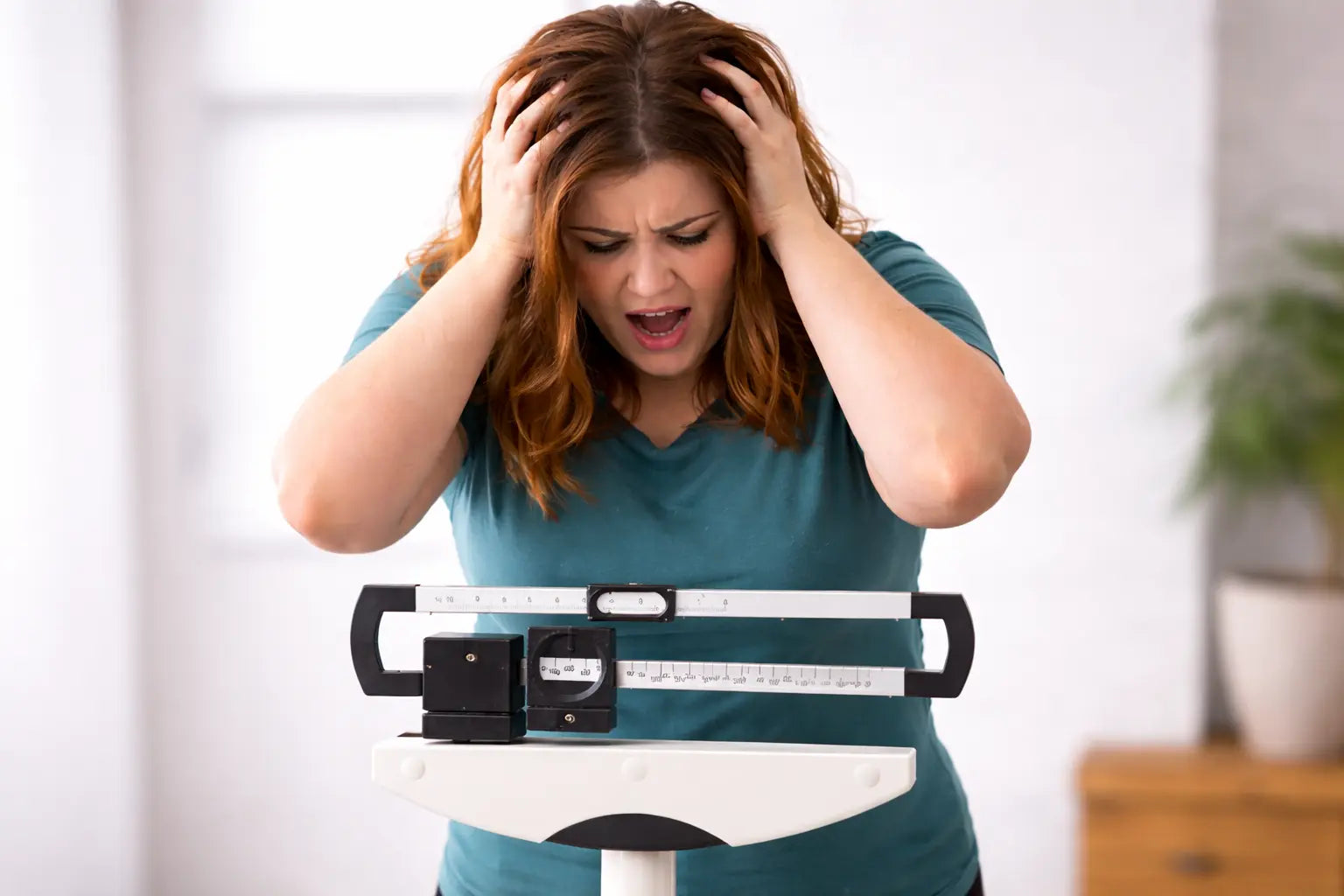
For decades, the mainstream message about weight loss has been a frustratingly simple one: "Eat less, move more." If only it were that easy.
For millions struggling with stubborn weight, persistent cravings, and inexplicable fatigue, this advice feels like a cruel joke.
They’ve cut calories, logged miles, and wrestled with willpower, only to be met with stagnation or, worse, rebound weight gain.
What if the narrative you’ve been told is wrong, wrong, WRONG? Or incomplete? What if there are profound, yet rarely discussed, "secrets" about the true root causes of your weight struggles – secrets that go far beyond diet and exercise?
Today, cutting-edge science is finally unraveling the hidden culprits behind the global obesity epidemic.
Researchers are increasingly pointing fingers at a pervasive, invisible enemy -- environmental toxins and the food supply itself that are reprogramming our bodies to store fat, resist weight loss, and sabotage our best efforts.
It’s not your fault. This article will empower you with knowledge. It’s time to shed light on these unspoken truths and equip you with an actionable roadmap to reclaim your overall health, not just your waistline.
The truth is, the human body is not a simple calculator; it’s a complex biochemical orchestra, and its instruments are being played out of tune by modern life.
What if your body is being tricked by your hormones and metabolism into believing it’s in a perpetual famine, even when you’re eating well? This is precisely what’s happening to millions of people without their knowledge.
The "secrets" you haven't been told include an insidious class of compounds that don’t contain a single calorie... yet they're powerful enough to rewrite your metabolic programming, hijack your hormones, and silence your brain's signals of satiety.
And then there’s the wholesale hijacking of our food supply with highly addictive substances, so we keep eating more.
These are the true architects of today's most stubborn weight problems. Let’s dig into the five Secret Deceptions, and what you can do about them starting today.

Secret #1: The Invisible Invaders – Obesogens and Endocrine Disrupting Chemicals (EDCs)
This is perhaps the most profound and unsettling secret. We’re living in a chemical soup, surrounded by synthetic compounds that are actively making us fat.
These aren't just speculative threats... there are scientifically recognized "obesogens" – chemicals that directly promote obesity. Think of obesogens as silent saboteurs.
They don't add a single calorie to your diet, but they alter your biology, compelling your body to create more fat cells and store more fat within them.
The body stores obesogens in fat cells to protect the organs. So long as the toxic load is high, the body will "refuse" to burn that fat. Here are the primary obesogens:
Plastics (BPA, Phthalates, Microplastics)
Plastics are now found in almost every area of modern life – plastic food containers, water bottles, the lining of canned goods, personal care products, and even thermal receipts.
BPA (Bisphenol A) and Phthalates are notorious estrogen mimickers. They bind to your body’s estrogen receptors, sending signals that tell your body to ramp up fat production and storage, particularly around the midsection.
They activate a "master switch" in your cells called PPAR-γ, which diverts stem cells towards becoming fat cells instead of bone or muscle.
The Microplastic Threat
Even more insidious, research in 2025 highlights that nearly all humans now alive have microplastics embedded in their tissues.
These tiny plastic fragments act as "Trojan horses," carrying concentrated doses of other toxins and directly contributing to systemic inflammation, a known precursor to insulin resistance and weight gain.
They disrupt the delicate balance of the gut microbiome, further impairing metabolism. The most frustrating part of these root causes is that they alter your Metabolic Set-Point.
If your body is "programmed" by toxins to believe it is in a state of stress or estrogen dominance, it will fight to hold onto fat even during a calorie deficit. This explains why many people lose weight only to hit an immovable plateau or gain it all back.

The Microplastic Threat
Even more insidious, research in 2025 highlights that nearly all humans now alive have microplastics embedded in their tissues.
These tiny plastic fragments act as "Trojan horses," carrying concentrated doses of other toxins and directly contributing to systemic inflammation, a known precursor to insulin resistance and weight gain.
They disrupt the delicate balance of the gut microbiome, further impairing metabolism. The most frustrating part of these root causes is that they alter your Metabolic Set-Point.
If your body is "programmed" by toxins to believe it is in a state of stress or estrogen dominance, it will fight to hold onto fat even during a calorie deficit. This explains why many people lose weight only to hit an immovable plateau or gain it all back.
Per- and Polyfluoroalkyl Substances (PFAS)
These "forever chemicals" are found in non-stick cookware, water-resistant clothing, food packaging, and even drinking water.
They stick around in the environment for decades to centuries, possibly even longer, due to their extremely strong Carbon-Fluorine bond. Long-chain PFAS can stay in the human body for 3 to 10 years or more.
PFAS have been linked to slowed metabolism, increased weight gain after dieting, and higher cholesterol levels. They also disrupt thyroid function, a critical regulator of your metabolic rate.
Secret #2: The "Architects of Addiction": Big Tobacco’s Secret Role in Modern Food
How the Cigarette Playbook Engineered Your Plate
The reason you find it nearly impossible to eat just one chip or stop after a small bowl of cereal isn't a lack of willpower—it is a legacy of intentional engineering.
In the 1980s, facing increased regulation on cigarettes, tobacco giants like Philip Morris and R.J. Reynolds shifted their focus (and billions of dollars) to the food industry, acquiring household names like Kraft, General Foods, and Nabisco.
They didn't just buy these companies. They brought their expertise in chemical addiction with them, turning snacks into “delivery systems” for dopamine.
The "Betcha Can’t Eat Just One" Reality
Perhaps no campaign captured this era of food engineering for addictiveness better than the Lay’s slogan, "Betcha Can't Eat Just One." While presented as a playful dare, it was in actuality a biological truth.
Tobacco researchers applied the same "bliss point" used to hook smokers, to create "hyper-palatable" foods.
A study in the journal Addiction found that foods owned by tobacco companies were 29% to 80% more likely to be engineered for overconsumption than those from non-tobacco brands.
The Fat-Sugar-Sodium Trifecta
Just as ammonia was added to cigarettes to speed up nicotine delivery to the brain, specific ratios of sodium, sugar, and fat were engineered to trigger massive dopamine releases.
This "supra-additive" effect overrides the body’s natural satiety (fullness) signals, making the "dare" to eat just one biologically impossible to win.

Targeting the Next Generation
Using techniques honed by characters like Joe Camel, these companies repurposed marketing tactics to hook children.
Philip Morris, for example, took its "Marlboro Country Store" loyalty program and transformed it into the "Wacky Warehouse" for Kool-Aid, rewarding kids with points for consuming sugary drinks.
Key Insight: Today's "food addiction" is a direct descendant of the tobacco industry's strategy. They replaced a declining cigarette market with a new, socially acceptable habit: chemically engineered snacking.
The food industry, especially those owned or previously owned by Big Tobacco, doesn't just use "ingredients"—they use active substances and sensory engineering to bypass your brain’s natural brakes.
Here’s How They Manufacture Addiction
Addictive Substances
While natural foods have sugar, fat, or salt, processed foods use concentrated versions that don't exist in nature. These act more like drugs than fuel, and they’re made in a lab.
The "Triad" (Sugar, Salt, Fat). Individually, these are fine. But when combined in specific ratios—like the fat and sugar in ice cream or the salt and fat in chips—they become "supra-additive."
This means the reward signal sent to the brain is greater than the sum of its parts.
Flavor Enhancers (MSG & Free Glutamates). Compounds like Monosodium Glutamate (MSG) or "yeast extract" stimulate the umami receptors, signaling high protein to the brain even when there is no protein.
This creates a "more-ish" effect where the brain demands another hit of that savory signal.
Emulsifiers (The Texture Hook). Substances like polysorbate 80 or carboxymethylcellulose create a "creamy" or "smooth" mouthfeel.
Beyond texture, recent studies suggest these can cross the blood-brain barrier and interfere with the brain's satiety (fullness) signaling, keeping the "hunger" switch on.
High-Fructose Corn Syrup (HFCS). Unlike glucose, which the whole body uses for energy, fructose is processed almost entirely in the liver.
It doesn't stimulate leptin (the "I'm full" hormone) as much as other sugars, meaning you can drink a 20oz soda and your brain won't realize you've just consumed 250 calories.
How They "Decide" What Is Addictive
Food scientists don't guess; they use Psychophysophysics—the study of how physical stimuli (food) affect the mind. So yes, they are playing mind games with you.
The Bliss Point. Coined by Howard Moskowitz (a researcher who worked for major food brands), this is the precise mathematical point where the sweetness, saltiness, or richness is "just right."
Go below it, and the food is boring. Go above it, and it becomes "cloying" or too salty. The Bliss Point is the peak of the curve where the brain releases the maximum amount of dopamine.
Sensory-Specific Satiety (The "Avoidance" Strategy). Your brain is designed to get bored with one flavor so that you seek out a variety of nutrients.
If you eat a steak, you eventually get full. Food engineers avoid this satiety by creating complex but "low-impact" flavors.
A Dorito, for example, has so many competing flavors (lime, cheese, garlic, onion, acid) that the brain never "tires" of just one, allowing you to eat the whole bag without your brain saying, "Enough of that flavor." In direct contrast to that steak.
Vanishing Caloric Density. This is a tactic used for snacks like Cheetos. The Cheeto is mostly air and melts almost instantly in your mouth.
This tricks the brain into thinking the calories have "vanished," so it doesn't send a signal to the stomach that you are actually eating.
The "Crunch" Physics: Frito-Lay once used $40,000 chewing simulators to find the perfect "break point" for a potato chip.
They discovered the brain associates a specific decibel level and "snap" (about 4 pounds of pressure per square inch) with freshness. If a chip hits that exact acoustic frequency, the brain labels it as "high quality" and demands more.

Secret #3: The Gut Microbiome Hijack – Food Additives and Dysbiosis
Your gut is often called your "second brain," and it plays a monumental role in weight regulation. The trillions of bacteria living within you (your microbiome) dictate how well you absorb nutrients, how hungry you feel, and how easily you store fat.
Modern processed foods are waging war on this delicate microbiome ecosystem. Gut microbiome dysbiosis triggers obesity. We’re paying the price. Here are the worst culprits, all popular in ultra-processed addictive foods.
Emulsifiers (Carrageenan, Polysorbate 80, Carboxymethylcellulose)
These common food additives, found in everything from almond milk to salad dressings and ice cream, are designed to give foods a smooth texture. However, they act like detergents in your gut, eroding the protective mucus layer.
This creates a "leaky gut," letting bacterial toxins (endotoxins) leak into your bloodstream, where they trigger chronic, low-grade inflammation. This inflammation is a direct pathway to insulin resistance and a slowed metabolism.
Artificial Sweeteners (Aspartame, Sucralose, Saccharin)
The irony of "diet" products is profound. These zero-calorie sweeteners, theoretically designed to help you lose weight, often have the opposite effect.
They alter the gut microbiome, shifting the balance towards bacteria that are more efficient at extracting calories from food, even from healthy options.
Artificial sweeteners can also trigger insulin release without any actual sugar, leading to blood sugar dysregulation and increased fat storage.
Antibiotics
Overuse of antibiotics, both in medicine and through the food supply (meat and dairy from animals treated with antibiotics), indiscriminately wipes out beneficial gut bacteria, leaving an open field for less desirable strains (endotoxins) that can contribute to weight gain.

Secret #4: The Inflammatory Fuel – Industrial Seed Oils (Corn, Soy, Canola, Sunflower, Safflower)
For decades, we were told to fear saturated fat and embrace "heart-healthy" vegetable oils. This advice, now widely challenged, has inadvertently flooded our diets with highly inflammatory fats that drive metabolic dysfunction.
Most of the foods in America come from just a few crops, such as corn, wheat, soy, and canola, largely due to farming subsidies that encourage farmers to mass-produce these crops and sell them below cost.
These cheap foods are, in turn, made into the ultra-processed foods we eat every day. These mono-cropped foods are unhealthy and contribute to major health issues such as diabetes, heart disease, and obesity.
Since our bodies naturally resist these foods, food companies make them more appealing with substances to make these foods as addictive as possible.
Seed oils also drive omega-6 overload, leptin resistance, oxidized metabolites, and gut disruption.
Omega-6 Overload
Humans evolved on a balanced Omega-6 to Omega-3 ratio (around 1:1 to 4:1). Today, due to the ubiquity of industrial seed oils, this ratio is often as high as 20:1.
Excessive Omega-6 (specifically linoleic acid) creates a constant state of cellular inflammation, damaging mitochondria (your cell's energy powerhouses), and making it harder for your body to burn fat for fuel.
Leptin Resistance
High linoleic acid intake also contributes to leptin resistance. Leptin is the hormone produced by fat cells that tells your brain you’re full and that you have sufficient energy stores.
When your brain becomes "deaf" to leptin, you stay perpetually hungry, your metabolism slows down, and your body fights to store more fat.
Oxidized Metabolites (OXLAMs)
Highly unstable seed oils easily oxidize when exposed to heat, light, or air (such as frying at high temperatures).
This oxidation creates toxic byproducts (OXLAMs) that damage cell membranes, contributing to more inflammation and metabolic slowdown.

Secret #5: The Circadian Sabotage – Light Pollution and Sleep Disruption
Our bodies are designed to operate on a 24-hour cycle, or circadian rhythm, governed by natural light and darkness.
Modern life, with its constant artificial light, screen time, and erratic schedules, is throwing this delicate light-dark system into chaos, directly impacting our weight.
Melatonin Suppression
Exposure to blue light from screens (phones, tablets, TVs) in the evening suppresses the production of melatonin, the sleep hormone.
Poor sleep, even just one night, significantly impairs insulin sensitivity, increases ghrelin (the hunger hormone), and decreases leptin (the fullness hormone), leading to increased cravings for high-calorie foods.
Disrupted Metabolism
Your body's fat-burning and fat-storing genes are regulated by your circadian rhythm. When this rhythm is disturbed, your body becomes less efficient at burning fat and more prone to storing it, especially around the belly.
Cortisol Imbalance
Chronic sleep deprivation elevates cortisol, the stress hormone. High cortisol promotes belly fat storage and can lead to muscle breakdown, which further slows metabolism.
Altering Your Metabolic Set-Point
The most frustrating part of all these root causes is that they alter your Metabolic Set-Point. If your body is "programmed" by toxins to believe it’s in a state of stress or estrogen dominance, it will fight to hold onto fat even during a calorie deficit.
This explains why many people lose weight only to hit an immovable plateau or gain it all back.
Reclaiming Your Metabolic Health: An Action Plan to Address Toxic Overload
Understanding these root causes is the first step; the next is empowering yourself with an action plan. This isn't about dieting; it's about detoxifying your environment and recalibrating your body's innate fat-burning signaling.

Phase 1: The Kitchen Audit – Eliminating the Worst Offenders (Weeks 1-4)
1. Banish Industrial Seed Oils
This is non-negotiable. Replace all corn, soy, canola, sunflower, safflower, and grapeseed oils with avocado oil, tallow, ghee, grassfed butter, and coconut oil for cooking. And use only extra virgin olive oil for dressings and dipping.
2. Purge Processed Foods
Focus on whole, single-ingredient foods. Read labels meticulously to avoid the following:
- Seed oils (corn, soy, canola, sunflower, safflower, and grapeseed)
- Emulsifiers – Carrageenan, polysorbate 80, carboxymethylcellulose, lecithin (if not sunflower-derived).
- Artificial sweeteners – Aspartame, sucralose, saccharin.
-
MSG and other “flavor enhancers.”
You do not want these highly addictive processed foods in your pantry, acting as a daily temptation. Half of the battle is setting yourself up for success by not bringing temptation into your house.
Remember, they’re playing with your mind. If you want to be in control of your health and weight, don’t play into their hand.
3. Go Organic (especially where it matters most)
Prioritize organic for the “Dirty Dozen” (strawberries, spinach, kale, grapes, apples, peaches, pears, nectarines, cherries, blueberries, bell & hot peppers, green beans) to minimize pesticide/herbicide exposure.
4. Embrace Clean Protein
Choose grass-fed, pasture-raised meats and wild-caught fish to reduce exposure to hormones, antibiotics, and inflammatory feed.
5. Filter Your Water
Invest in a high-quality water filter (reverse osmosis or activated carbon) for all drinking and cooking water to remove PFAS, chlorine, and microplastics.
Phase 2: The Home & Body Detox – Reducing Environmental Burden (Weeks 2-8)
1. Break Up with Plastics
-
Food Storage – Switch to glass containers (i.e., Pyrex) and stainless-steel water bottles.
-
Microwave Safety – Never ever microwave food in plastic, including those take-out containers from restaurants. Transfer to glass.
-
Canned Goods – Opt for fresh or frozen foods over canned, or choose brands that specifically state “BPA-free” linings.
2. Clean Up Personal Care & Cleaning Products
Many everyday products contain phthalates and synthetic fragrances.
-
Go Fragrance-Free – Choose personal care (shampoo, lotion, deodorant) and cleaning products that are explicitly “fragrance-free,” or use natural essential oils.
-
DIY Cleaning Products – Use vinegar, baking soda, and essential oils for simple, effective, and cost-efficient cleaning.
3. Upgrade Cookware
Ditch non-stick (Teflon) pans for cast iron, stainless steel, or ceramic to avoid PFAS.
4. Air Quality
Use an air purifier with a HEPA H13 or H14 filter to reduce airborne toxins, dust, and microplastics.

Phase 3: Rebuilding and Rebalancing – Gut Health and Lifestyle (Ongoing)
1. Nourish Your Gut Microbiome
- Fiber-Rich Foods – Incorporate a wide variety of plant foods, such as colorful veggies, fruits, legumes, and whole grains, to feed beneficial bacteria. These also "stretch" your stomach and signal fullness to the brain. Aim for 30+ different plant foods per week.
- Fermented Foods – Introduce fermented foods daily (sauerkraut, kimchi, kefir, kombucha) to provide probiotics.
- Prebiotic Supplements – Consider prebiotics (i.e., inulin, FOS) if diet isn’t sufficient.
2. Learn to Cook Foods at Home from Scratch
Ultimately, the only way to dump the junk food paradigm is to reclaim the traditional knowledge of how to grow your own food (or live somewhere where you can realistically and consistently obtain it) and learn to cook it yourself.
It is unrealistic and unwise to believe that Big Food is going to have your best interests at heart. And it is impossible to avoid these hidden toxins without spending some time preparing your own food.
3. Prioritize Sleep Hygiene
-
Consistent Schedule – Go to bed and wake up at roughly the same time every day, even on weekends.
- Pitch Dark – Make your bedroom completely dark. Block out all light with room-darkening shades and rid your bedroom of LED plugs.
- Digital Sunset – Turn off all screens (TV, phone, tablet) at least 60-90 minutes before bed.
- Cool and Quiet – Ensure your bedroom is cool, quiet, and comfortable.
4. Manage Stress
Chronic stress elevates cortisol, promoting fat storage. Integrate stress-reducing practices such as:
- Mindfulness, meditation, yoga.
- Spending time in nature, or at least outside.
- Breathing exercises, such as the 4-7-8 breathing pattern.
5. Move Your Body (Consciously)
Focus on movement that feels good and builds muscle. Resistance training is crucial for boosting metabolism and improving insulin sensitivity. Don’t punish your body... empower it.
The Path Forward: Empowerment Through Knowledge The journey to sustainable weight loss and vibrant health in 2026 and forward doesn’t demand willpower; it demands knowledge and awareness.
By understanding the insidious "secrets" of obesogens, addictive food engineering, gut disruptors, inflammatory oils, and circadian sabotage, you no longer need to feel like a passive victim of your biology.
You are now equipped with the knowledge to make informed choices that can dramatically reduce your toxic load, recalibrate your metabolism, and allow your body to naturally find its healthy set-point.
This isn't a quick fix; it's a profound shift in how you live, eat, and interact with your environment. But it will pay smart dividends for years to come.
It’s time to stop blaming yourself and start healing your system. Your body is incredibly resilient, and by removing the roadblocks, you can unlock its inherent ability to thrive. The secrets are out in the open – now it’s time to take control!

Frequently Asked Questions
1. Why doesn’t “calories in, calories out” work for many people?
Calories in versus calories out oversimplifies human biology. Weight regulation is influenced by hormones, gut health, inflammation, environmental toxins, sleep, and circadian rhythms. These factors alter metabolic set-point, hunger signals, and fat storage—causing the body to resist weight loss even during periods of calorie restriction.
2. What are obesogens and how do they affect weight gain?
Obesogens are environmental chemicals—such as BPA, phthalates, pesticides, and PFAS—that interfere with hormonal signaling and fat metabolism.
These compounds can promote the creation and storage of fat cells, disrupt insulin sensitivity, and reprogram the body to defend a higher weight set-point, independent of calorie intake.
3. Can food additives and ultra-processed foods cause weight gain?
Yes. Many food additives—including emulsifiers, artificial sweeteners, and flavor enhancers—disrupt the gut microbiome, increase inflammation, and interfere with satiety hormones like leptin. What's more, highly processed foods are engineered to override natural fullness signals, making overeating more likely.
4. Do industrial seed oils contribute to metabolic dysfunction?
Yes. Intake of industrial seed oils high in omega-6 fatty acids can promote chronic inflammation, leptin resistance, and mitochondrial dysfunction. These effects impair fat burning and contribute to weight gain, particularly when consumed in large amounts through processed foods.
5. How do sleep and circadian rhythm affect weight loss?
Poor sleep and disrupted circadian rhythms impair insulin sensitivity, increase hunger hormones (ghrelin), decrease fullness hormones (leptin), and elevate cortisol. Even short-term sleep deprivation can shift the body toward fat storage and increased cravings, regardless of calorie intake.



Share:
The Dark Side of the “Skinny Shot”
Seed Oil Heart Damage: Risks and Healthier Alternatives