
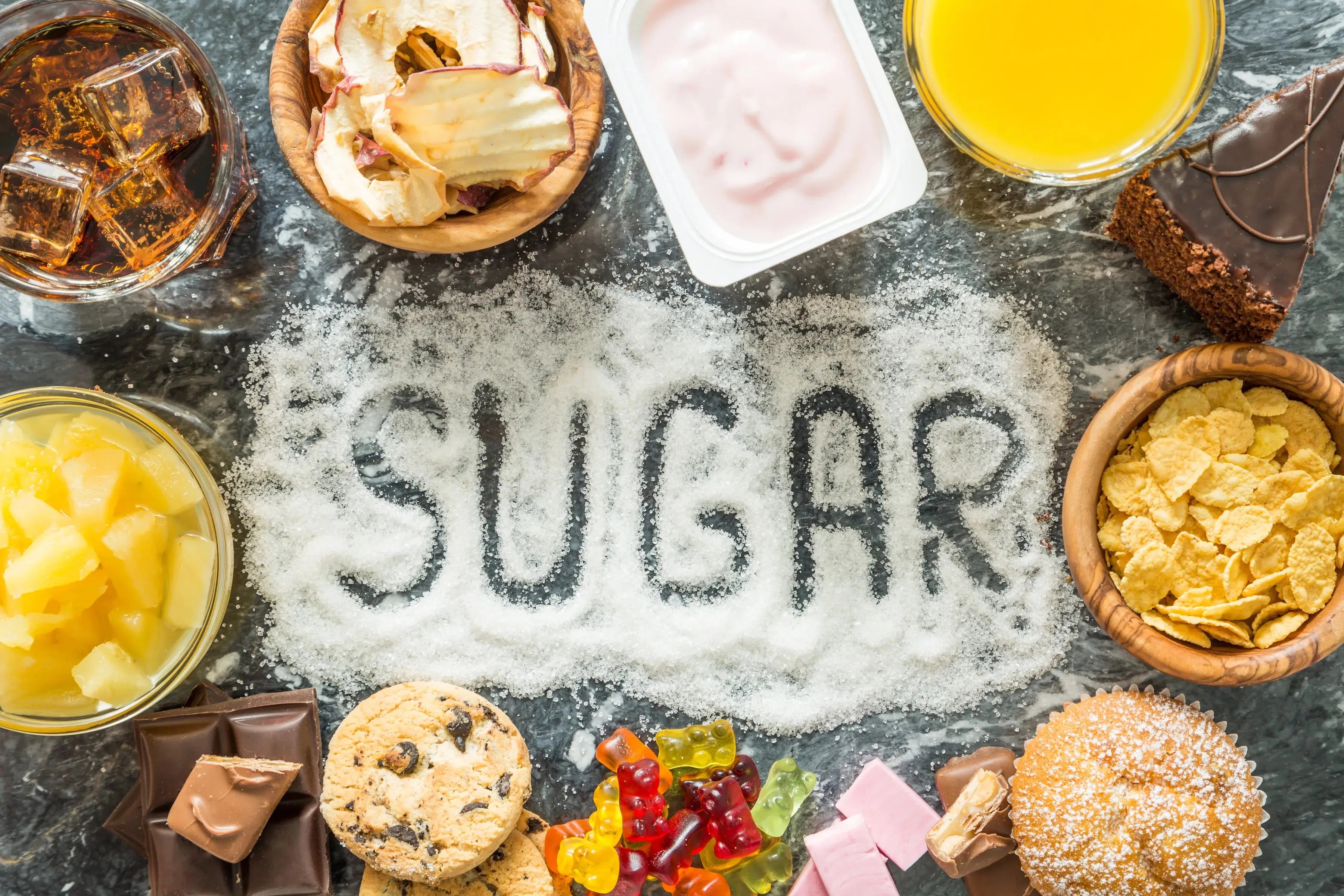
It sweetly delights us with each comforting bite pleasing our taste buds with a burst of goodness. Then silently enters our bloodstream to wreak havoc everywhere else.
Surely, you already know that a steady diet of sugary foods can yield extra pounds. But did you know that excess blood sugar can lead to glycation which accelerates body-wide aging?

What is Glycation?
Glycation refers to a chemical reaction in which sugar molecules, such as glucose or fructose, bond with proteins or fats without the involvement of enzymes.
This reaction occurs spontaneously in the body because of high blood sugar levels or the consumption of sugary foods and beverages.
When sugars attach to proteins or fats, they form new molecules called advanced glycation end products (AGEs).
AGEs can accumulate in various tissues throughout the body, including the skin, blood vessels, kidneys, and nerves.
They are known to contribute to various age-related diseases and complications, such as diabetes, cardiovascular disease, cancer, Alzheimer's disease, and kidney dysfunction.
It's More Than Table Sugar
You may think of sugar as the cubes you add to your coffee, delicious chocolate cake, cookies, and sodas. Sugars go beyond coffee and dessert staples.
When we say sugars, it includes any sweet, soluble carbohydrate. Sugars are building blocks. When they combine, they form carbohydrates or more complex sugars like starches.
What Causes Glycation?
Glycation is tied in part to the glycemic index. This food classification system measures how foods, particularly carbohydrates, impact blood sugar levels.
When you take a bite of a cheeseburger or dessert it’s digested and absorbed into the bloodstream. Blood sugar concentrations increase and circulate throughout the body so that cells can access nutrients to produce energy.
But there's only so much sugar that cells need and it’s a very miniscule amount. Excess sugar in the blood idly circulates throughout the body with two risky outcomes:
1. Glycation. Instead of being used to produce energy, excess sugar bumps and bashes against our cells until glycation occurs. This compromises the integrity, structure and function of lipids and foundational proteins
2. Fat storage. As excess sugars bombard our cells, they travel throughout the body, arrive at the liver, and are eventually stored as fat.

The Hidden Side Effects of Glycation
Glycation is linked to faster aging, cardiovascular disorders, diabetic complications, and other chronic conditions such as: [1]
- Protein Dysfunction. Glycation can alter the structure and function of proteins. This can disrupt vital cellular processes and lead to malfunctioning enzymes, receptors, and signaling molecules. [2,9]
- Oxidative Stress. AGEs can generate reactive oxygen species (ROS) and increase oxidative stress which damages cells and tissues. Oxidative stress can lead to inflammation and DNA damage. [3]
- Inflammation. AGEs can trigger an inflammatory response. Chronic inflammation is associated with numerous diseases including cardiovascular disease, diabetes, and certain types of cancer. [4,5,6]
- Tissue Damage. Accumulation of AGEs in tissues can cause structural alterations. In Alzheimer's disease, the buildup of AGEs in the brain may play a role in neuronal damage and cognitive decline. [7,8]
- Cellular Dysfunction. Glycation can disrupt cellular processes, energy production, and gene expression. This can affect the functionality of cells, contributing to the development of various diseases. [1,3,4]
How to Reduce Glycation
Fortunately, there are ways to reduce damage inflicted by advanced glycation end products (AGEs).
You can start today by taking the following steps:
1.Balanced Diet. Follow a balanced diet that is low in processed sugars and high in nutrient-dense foods. Limit your intake of sugary snacks, desserts, sugary beverages (including fruit juices), and processed foods.
Consume whole grains, fruits, vegetables, lean proteins, and healthy fats (such as avocado, olive oil, olives, eggs, etc.).
2. Glycemic Control. Maintain stable blood sugar levels by monitoring your carbohydrate intake. Choose low-glycemic index foods and spread out your meals throughout the day.
3. Cooking Methods. Select cooking methods such as steaming, boiling, and stewing instead of high-temperature cooking techniques like frying or grilling.
High-heat cooking can promote the formation of AGEs. Cooking at lower temperatures and using moist cooking methods can help reduce AGE formation.
4. Antioxidant-Rich Foods. Eat foods rich in antioxidants, which can help counteract oxidative stress caused by AGEs. Examples include berries, green leafy vegetables, colorful fruits, nuts, seeds, and green tea.
5. AGE-Inhibiting Agents. Some natural compounds have been found to inhibit the formation of AGEs. Herbs and spices such as cinnamon, turmeric, curcumin, and ginger have been shown to reduce glycation properties.
Including these ingredients in your meals or consuming them as supplements may help mitigate the effects of glycation.
6. Regular Exercise. Regular physical activity can help improve insulin sensitivity, regulate blood sugar levels, and reduce the risk of glycation-related complications.
Aim for a combination of aerobic exercises, strength training, and flexibility exercises.
7. Avoid Smoking and Excessive Alcohol Consumption. These habits contribute to oxidative stress and exacerbate the effects of glycation. Minimizing or avoiding can help protect your cells from damage.
Sources
Fournet M, Bonté F, Desmoulière A. Glycation Damage: A Possible Hub for Major Pathophysiological Disorders and Aging. Aging Dis. 2018 Oct;9(5):880-900.
Yamagishi SI. Role of Advanced Glycation Endproduct (AGE)-Receptor for Advanced Glycation Endproduct (RAGE) Axis in Cardiovascular Disease and Its Therapeutic Intervention. Circ J. 2019 Aug 23;83(9):1822-8.
Moldogazieva NT, Mokhosoev IM, Mel’nikova TI, et al. Oxidative Stress and Advanced Lipoxidation and Glycation End Products (ALEs and AGEs) in Aging and Age-Related Diseases. Oxid Med Cell Longev. 2019;2019:3085756.
Moldogazieva NT, Mokhosoev IM, Mel’nikova TI, et al. Oxidative Stress and Advanced Lipoxidation and Glycation End Products (ALEs and AGEs) in Aging and Age-Related Diseases. Oxid Med Cell Longev. 2019;2019:3085756.
Arnold P, Njemini R, Vantieghem S, et al. Reaction time in healthy elderly is associated with chronic low-grade inflammation and advanced glycation product. Exp Gerontol. 2018 Jul 15;108:118-24.
Yubero-Serrano EM, Perez-Martinez P. Advanced Glycation End Products and Their Involvement in Cardiovascular Disease. Angiology . 2020 Sep;71(8):698-700.
Yamagishi SI, Nakamura N, Matsui T. Glycation and cardiovascular disease in diabetes: A perspective on the concept of metabolic memory. J Diabetes . 2017 Feb;9(2):141-8.
Li J, Liu D, Sun L, et al. Advanced glycation end products and neurodegenerative diseases: mechanisms and perspective. J Neurol Sci. 2012 Jun 15;317(1-2):1-5.
Simm A. Protein glycation during aging and in cardiovascular disease. J Proteomics. 2013 Oct 3



Share:
Do “Blue Zone” Communities Hold the Secrets to Longevity?
Broccoli: The Nutritional Powerhouse