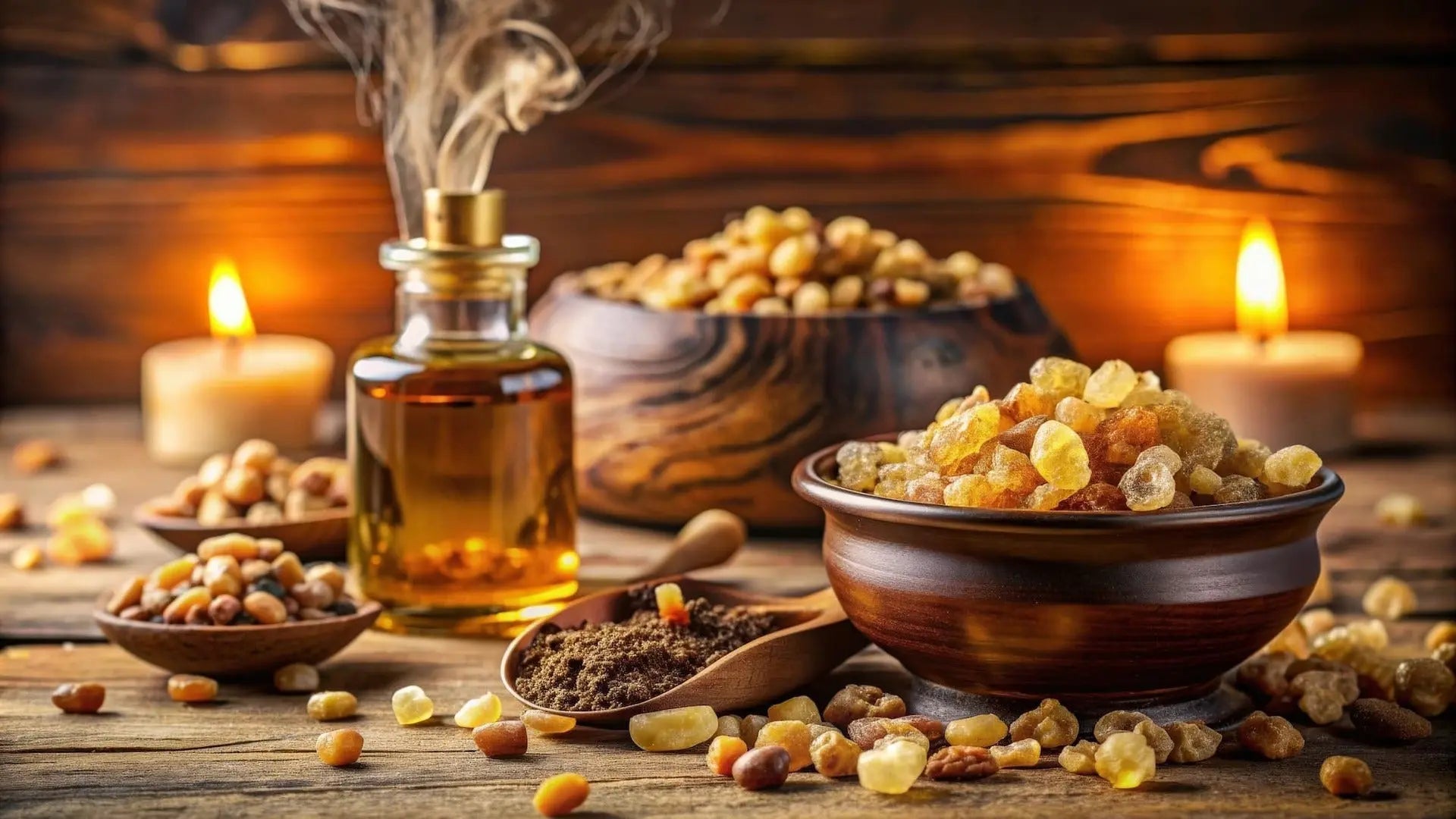
For thousands of years, frankincense was anything but ordinary.
Kings prized it, traders carried it across dangerous desert routes, and ancient cultures valued the fragrant resin enough to offer it as one of their most precious gifts.
But frankincense didn’t disappear with the ancient world.
Today, this storied resin is showing up in skincare, aromatherapy, traditional wellness practices, and modern botanical formulas.
Researchers are still exploring what may have made it so prized in the first place.
What exactly is hidden inside this aromatic resin?
And why, after thousands of years, are scientists and wellness experts still paying attention? Frankincense: A Gift Fit for Kings
For thousands of years, frankincense was considered one of the world’s most precious gifts.
Long before modern trade routes, this golden resin traveled across deserts by caravan and was prized by kings, priests, healers, and merchants.
In the ancient world, frankincense was rare, fragrant, and valuable. It was burned in temples, used in sacred ceremonies, blended into perfumes and anointing oils, and offered as a sign of honor and devotion.
Because it came from distant lands and required careful harvesting, it was often treated as a luxury worthy of royalty.
That is why frankincense appears in the biblical story of the wise men, who brought gold, frankincense, and myrrh to honor the newborn Jesus.
Gold symbolized kingship, frankincense was associated with worship and sacred offering, and myrrh was used in anointing and burial traditions.
Today, frankincense is far more accessible, but its kingly reputation remains.
This ancient resin still carries a sense of reverence, purity, and tradition—a reminder that some botanicals have been valued for centuries not only for what they do, but for what they represent.
What Is Frankincense?
Frankincense is an aromatic resin harvested from Boswellia trees.
For thousands of years, it has been prized for incense, ceremony, skincare, aromatherapy, and traditional wellness—and was once considered a gift fit for kings.
Today, this ancient botanical remains valued for its distinctive warm, resinous aroma. But its appeal goes beyond tradition.
Frankincense is also being studied for its potential role in supporting cellular wellness, immune balance, a healthy inflammatory response, joint comfort, skin health, relaxation, and whole-body resilience.*
But there’s one important detail many people miss...
“Frankincense” Can Refer to More than 1 Thing
“Frankincense” may mean frankincense resin, frankincense essential oil, Boswellia extract, or specific compounds called boswellic acids.
These forms come from related sources, but they are not identical—and they should not be used interchangeably, even though they often are.
Understanding the difference can help you choose the right product for your goals.
The bark of the tree is carefully tapped, and the sticky sap that comes out hardens into golden or amber-colored resin “tears.”
These resin tears can be burned as incense, steam-distilled into essential oil, or processed into extracts for dietary supplements.
Different Boswellia species produce different types of frankincense, such as:
-
Boswellia carteri
-
Boswellia sacra
-
Boswellia serrata
-
Boswellia frereana
-
Boswellia papyrifera
The chemistry of frankincense depends on the species, where it’s grown, how it’s harvested, how fresh the resin is, and how it is processed.
That matters because a frankincense essential oil, a Boswellia capsule, and a raw resin tear may all come from Boswellia trees—but they can contain very different active compounds.

Frankincense vs. Boswellia: Are They the Same?
Frankincense and Boswellia are closely related, but they do not always mean the same thing.
Frankincense usually refers to the aromatic resin or the essential oil derived from it.
Boswellia is the name of the tree genus. In supplement language, “Boswellia” often refers to concentrated extracts made from Boswellia resin.
Here’s the easiest way to think about it:
-
Boswellia is the tree
-
Frankincense is the resin produced by the tree
-
Boswellia extract is a supplement ingredient made from the resin
-
Frankincense essential oil is the aromatic oil distilled from the resin
This distinction is important because different forms are used for different purposes.
Frankincense essential oil is most often used for aroma, topical products, meditation, and skincare.
Boswellia extracts are more often used in capsules and tablets for joint comfort, healthy inflammatory balance, and cellular wellness support.*
Frankincense Essential Oil vs. Boswellia Extract
Frankincense essential oil and Boswellia extract are not the same thing.
Frankincense essential oil is produced by steam distilling the resin. This captures lighter, aromatic compounds, such as terpenes. These compounds give frankincense its familiar scent.
Boswellia extract is usually made from the resin itself. It is more likely to contain heavier resin compounds, including boswellic acids, which are often discussed in research for healthy inflammatory balance and cellular signaling.*
A review of frankincense describes Boswellia plants as resin-producing trees used traditionally across regions including Arabia, India, China, and Kenya, with different species and extraction methods yielding different chemical profiles.
-
Frankincense resin: The hardened sap from Boswellia trees, traditionally used as incense, chewing resin, and to make extracts
-
Frankincense essential oil: A steam-distilled aromatic oil commonly used in aromatherapy, meditation, topical applications, and skincare
-
Boswellia extract: A concentrated extract made from the resin, commonly used in supplements to support joint comfort, healthy inflammatory balance, and cellular wellness*
-
Boswellic acids: Naturally occurring compounds in Boswellia resin that are the focus of research on inflammatory balance and cellular wellness*
✅ Key Takeaway: If a study is about Boswellia extract or boswellic acids, it might not necessarily apply to frankincense essential oil.
What Are the Active Compounds in Frankincense?
Frankincense contains many natural compounds, and the chemistry is complex. The exact profile depends on the Boswellia species and how the resin is processed.
Important compound groups include:
Boswellic Acids
Boswellic acids are among the best-known compounds in Boswellia resin extracts. They are commonly studied for their role in supporting healthy inflammatory balance, tissue comfort, and cellular wellness pathways.*
Terpenes
Terpenes are aromatic compounds found in essential oils. They help give frankincense its warm, resinous, slightly citrus-like scent.
Depending on the species, frankincense essential oil may contain compounds such as alpha-pinene, limonene, and other volatile constituents.
Resin Compounds and Polysaccharides
Frankincense resin also contains naturally occurring compounds and polysaccharides that may contribute to its traditional uses and its role in immune and cellular wellness research.*

What Is Frankincense Good For?
Frankincense is used in different ways depending on the form. Some uses are based on wellness traditions. Others are based on emerging research.
1. Supports Healthy Inflammatory Balance*
Boswellia extracts are widely used to support a healthy inflammatory response.* Boswellia-derived compounds may help support the body’s normal inflammatory-balance pathways as part of overall wellness.*
This is one of the most common reasons Boswellia appears in supplement formulas, especially those designed for joint comfort, mobility, tissue resilience, and healthy aging.*
2. Supports Joint Comfort and Mobility*
Boswellia serrata extract is one of the most common Boswellia forms used in joint-support products, such as our active lifestyle compound, UltraCur® Advanced.
People often choose Boswellia supplements to support joint comfort, mobility, flexibility, and everyday movement.* Research is ongoing.
Boswellia extract may support joint comfort, mobility, and healthy inflammatory balance as part of an active lifestyle.*
3. Supports Cellular Wellness*
Frankincense and Boswellia-derived compounds are also studied for their effects on cellular signaling, oxidative stress, and cellular resilience.*
Frankincense-derived ingredients may support cellular wellness, healthy cell signaling, antioxidant defenses, and whole-body resilience.*
4. Supports Immune System Balance*
The immune system depends on healthy internal communication, balance, and appropriate response.
Frankincense-derived ingredients may support healthy immune signaling and whole-body resilience.*
5. Supports Relaxation Through Aroma*
Frankincense essential oil is often used in aromatherapy, prayer, meditation, breathwork, and evening routines. Its scent is warm, grounding, resinous, and slightly sweet.
Many people use it to create a calm atmosphere during meditation, prayer, breathing exercises, or evening wind-down routines with its aroma and atmosphere attributes.
6. Supports Skin Wellness*
Frankincense essential oil and frankincense-containing topical products are popular in skincare.
They’re often used in products for mature skin, dry skin, massage, and the appearance of tone and texture.
However, essential oils are concentrated and should be used carefully. Frankincense essential oil should be diluted before applying to skin, and it is smart to patch-test first.
Frankincense in Traditional Wellness
Frankincense has a long history of use in many cultures.
It has been used in ancient Egypt, Middle Eastern traditions, North African practices, Ayurveda, Traditional Chinese Medicine, incense ceremonies, religious rituals, and perfumery.
Historically, frankincense resin was valued not only for its scent but also for its role in traditional wellness routines and religious ceremonies.
Today, researchers are working to better understand how specific frankincense and Boswellia compounds may support normal wellness pathways.
Frankincense and Cellular Health Benefits
Frankincense gets a lot of attention because some Boswellia compounds are being studied for their relationship to cellular signaling and resilience.*
Frankincense-derived ingredients may support:
-
Cellular wellness*
-
Cellular resilience*
-
Normal cell signaling*
-
Healthy inflammatory balance*
-
Antioxidant defenses*
-
Immune system balance*
-
Whole-body resilience*
How Is Frankincense Used?
Frankincense comes in several forms, and the right form for you depends upon your goals.
Frankincense Resin
This is the hardened resin tears from the Boswellia tree. It is often burned as incense or used in traditional preparations.
Frankincense Essential Oil
This is the steam-distilled aromatic oil from the resin. It is commonly used for aromatherapy, topical products, skincare, and massage blends.

Boswellia Capsules or Tablets
These are usually made with Boswellia resin extract, not essential oil.
They are commonly used to support joint comfort, mobility, healthy inflammatory balance, and cellular wellness,* such as in our UltraCur® Advanced and ONCO-ADJUNCT™ Pathway 2™ products.
Liquid Formulas
Some liquid products use frankincense essential oil or resin-derived compounds in a carrier oil, such as our ONCO-ADJUNCT™ Pathway 1™ product. These should be used only as directed on the label.
Topical Creams and Balms
Frankincense may be included in topical products for massage, skin appearance, and comfort routines.
Can You Take Frankincense Internally?
Not all frankincense products are made for internal use. This is especially important with essential oils.
Essential oils are highly concentrated and should not be swallowed unless the product is specifically formulated, labeled, and professionally guided for internal use.
Don’t buy a bottle of frankincense essential oil and consume it by mouth.
Many internal-use supplements use Boswellia resin extract rather than frankincense essential oil.
Before using frankincense internally, always check:
-
Is it labeled for internal use?
-
What species is used?
-
Is it an essential oil or an extract?
-
What is the serving size?
-
Are there safety warnings?
-
Is practitioner guidance recommended?
If the label does not clearly say it is for internal use, do not swallow it.
Safety, Side Effects, and Precautions
Frankincense and Boswellia products are not appropriate for everyone.
Possible side effects may include:
-
Digestive upset
-
Nausea
-
Reflux
-
Loose stools
-
Headache
-
Skin irritation when used topically
-
Allergic reaction
-
Sensitivity to strong aromas
Use extra caution if you are pregnant or nursing, trying to conceive, taking medications, preparing for surgery, or using frankincense internally.
Talk with a healthcare practitioner before using frankincense or Boswellia products if you:
-
Take blood-thinning medication
-
Take blood pressure medication
-
Take blood sugar medication
-
Take immune-related medications
-
Have liver or kidney concerns
-
Have gallbladder or bile duct concerns
-
Have reflux or digestive sensitivity
-
Have asthma or fragrance sensitivity
-
Are preparing for surgery
-
Are pregnant or nursing
-
Are undergoing medical treatment
-
Have a diagnosed medication
Where Frankincense Fits in a Wellness Routine
Frankincense may fit into a wellness routine focused on:
-
Cellular wellness*
-
Healthy inflammatory balance*
-
Joint comfort*
-
Immune system balance*
-
Relaxation and grounding rituals*
-
Skin wellness*
-
Whole-body resilience*
The form matters. Someone interested in aroma or meditation may choose frankincense essential oil.
Someone interested in joint comfort or inflammatory-balance support* may look for Boswellia extract, such as in UltraCur® Advanced.
Someone using a practitioner-guided supplement system may use a carefully formulated internal product designed for cellular wellness support, such as in Pathway 1™ or Pathway 2™.*
Bottom Line
Frankincense is an ancient aromatic resin from Boswellia trees, used for centuries in ceremony, gifting, skincare, aromatherapy, incense, and traditional wellness.
Today, frankincense-derived ingredients are used in many of the same ways. Frankincense essential oil is mainly used for aroma, topical products, and relaxation routines.
Boswellia extracts are more often used in supplements to support healthy inflammatory balance, joint comfort, immune function, and cellular wellness.*
It’s helpful to know which form you are using.
Frankincense resin, frankincense essential oil, Boswellia extract, and boswellic acids are related — but they are not the same.
Choose products that are clearly labeled, carefully formulated, and appropriate for your goals.
If you take medications, have a medical condition, are pregnant or nursing, are preparing for surgery, or are using frankincense internally, ask a qualified healthcare practitioner first.

FAQs
1. What is frankincense?
Frankincense is an aromatic resin harvested from Boswellia trees. It has been used for thousands of years in incense, ceremony, skincare, aromatherapy, and traditional wellness practices.
2. Is frankincense the same as Boswellia?
Not exactly. Frankincense is the resin that comes from Boswellia trees. Boswellia is the tree genus. In supplement language, “Boswellia” often refers to concentrated resin extracts used in capsules or tablets.
But some formulations use frankincense in supplements also. You must read the labels.
3. What is frankincense good for?
Depending on the form, frankincense may support relaxation, skin wellness, joint comfort, healthy inflammatory balance, immune function, cellular wellness, and whole-body resilience.*
4. What is the difference between frankincense essential oil and Boswellia extract?
Frankincense essential oil contains aromatic volatile compounds and is often used for aroma, topical products, and skincare.
Boswellia extract is usually made from resin and may contain boswellic acids, which are commonly studied for healthy inflammatory balance and cellular wellness.*
5. Can you take frankincense internally?
Only use frankincense internally if the product is specifically formulated and labeled for internal use, such as in the case of our Pathway 1™ product.
Do not orally consume frankincense essential oil unless the product label and a qualified practitioner specifically direct you to do so.
6. Does frankincense support cellular health?
Frankincense-derived compounds are being studied for their role in cellular signaling, antioxidant response, healthy inflammatory balance, and cellular resilience.*
To be cleaar, this does not mean frankincense treats, prevents, or cures cancer or any other disease.
7. Is frankincense safe?
Frankincense is not appropriate for everyone. Talk with a healthcare practitioner before using it if you are pregnant or nursing, take medications, have a medical condition, are preparing for surgery, or plan to use it internally.
8. What should I look for in a frankincense product?
Look for a clearly labeled product that preferably lists the Boswellia species, ingredient form, serving directions, cautions, and whether it is intended for aromatic, topical, or internal use.

Share:
The Smart Consumer’s Guide to Peptides: Are Peptides Safe?
The Oddly Named Root Behind Better Movement Support